Whether it was for a school project, a new marketing campaign, or your soon-to-be remodeled kitchen, chances are you’ve had more than a few brainstorming sessions in your life. Who hasn’t? Brainstorming is widely used, and for good reason—it’s a simple and effective method for generating new ideas.
Think back to some of the recent brainstorming you’ve done: It was likely informal, spur of the moment, just jotting down some notes and ideas. Sound familiar? This is called spontaneous brainstorming.
While spontaneous brainstorming is useful in small-scale, informal situations, imagine using it in a business meeting. Things could become disorganized. You might end up with dozens of unrealistic ideas to sift through, or maybe two or three people dominated the conversation and you missed out on hearing the quiet guy in IT’s golden idea. In situations like these, a more structured brainstorming style comes in handy.
Just like spontaneous brainstorming, structured brainstorming is a method for generating ideas. Structured brainstorming, however, has formal elements that make it more focused, goal-oriented, and, in many instances, effective.
What is structured brainstorming?
Structured brainstorming is similar to spontaneous brainstorming but it takes a more organized approach. And while there isn’t one “right” way to introduce structure into the brainstorming process, the first step of structured brainstorming is always the same: Plan, plan, plan!
Spontaneous brainstorming, as the name suggests, occurs spur of the moment. Participants generate and share lots of ideas on the spot, so your opportunities to introduce any sort of structure are limited.
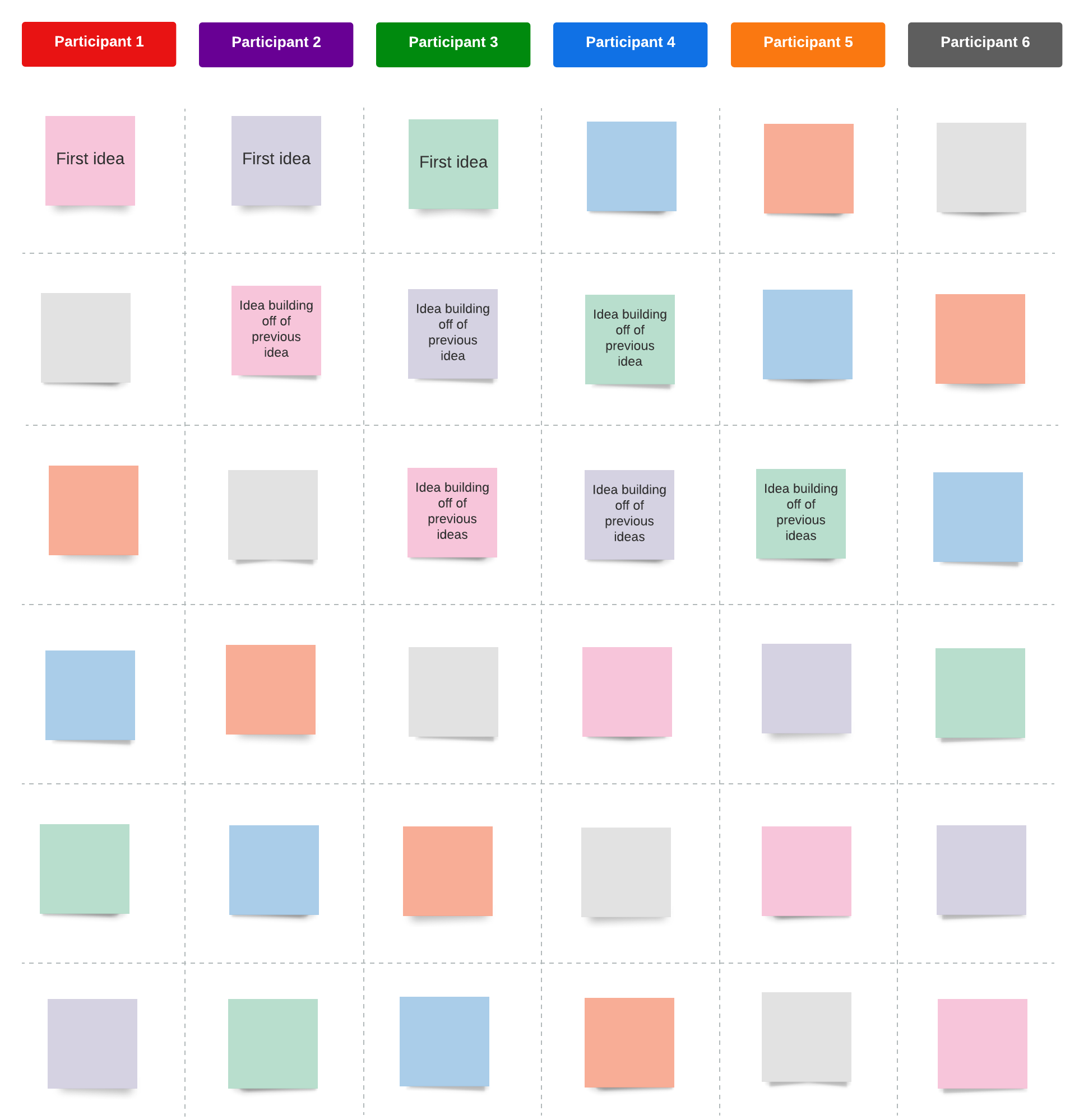
When you plan your brainstorming ahead of time though, you can structure the brainstorming session any way you’d like. Want participants to read over a set of pain points and then bring their two best solutions to the meeting? No problem—send out a document a few days before the meeting and have your coworkers add their responses. Are there a series of problems you want to address and solve? Make a Lucidspark board that breaks down each problem in turn and provides space to record possible solutions.
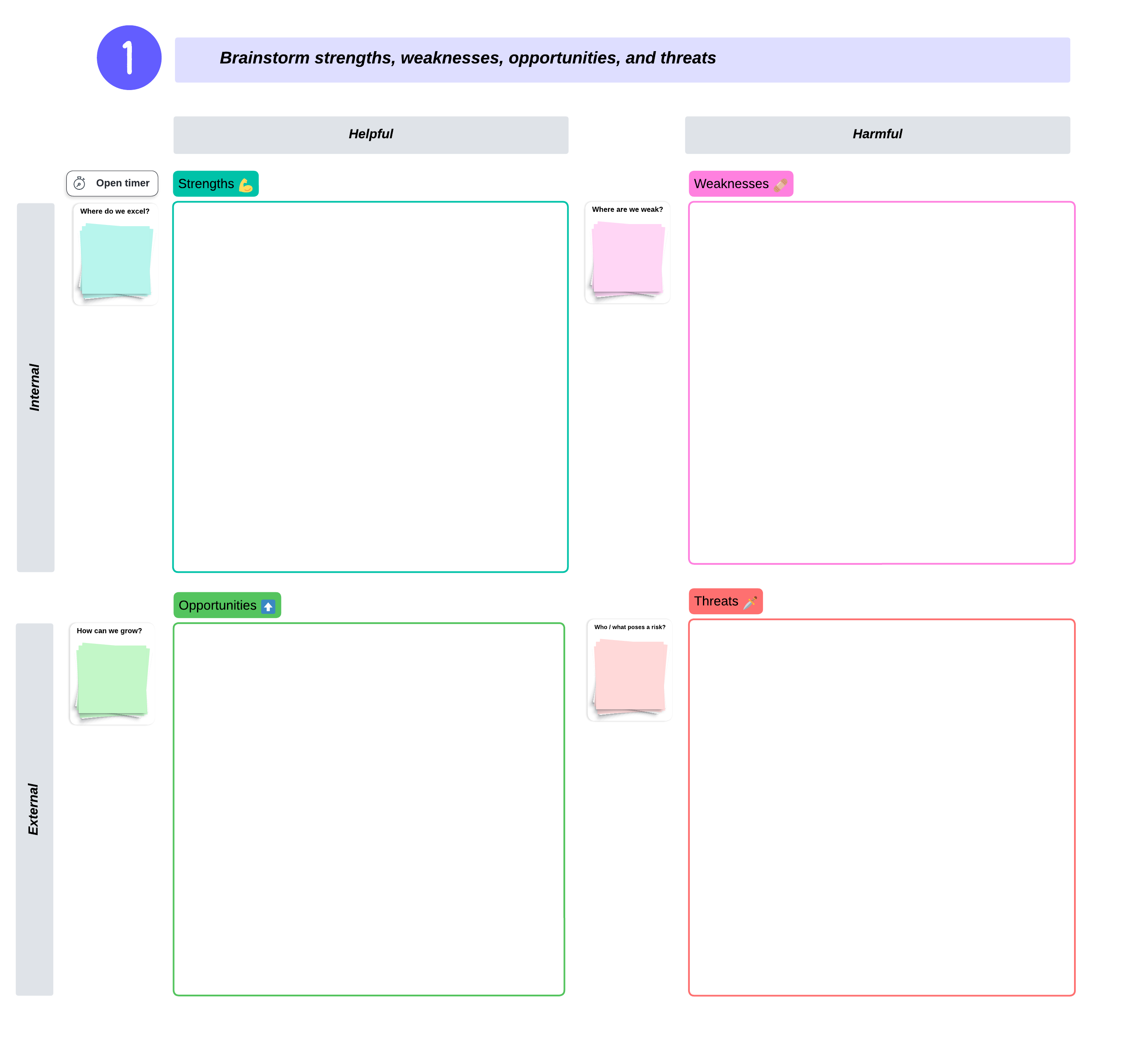
Structured brainstorming helps participants keep the end goal in mind throughout the brainstorming process. As you lead a structured brainstorming session, you might use SWOT, opens in a new tab or PESTEL, opens in a new tab analysis to help participants hone in on specific strategy goals. Even something as simple as stating your desired outcome can add an additional level of structure and focus to a brainstorming session.
Advantages of structured brainstorming
One of the biggest advantages of structured brainstorming is that it allows participants to come prepared. With spontaneous brainstorming, there is often a quantity over quality mentality—people throw out ideas left and right, regardless of feasibility. When participants come prepared, they bring their best ideas to the table.
Structured brainstorming also allows each participant’s voice to be heard. Too often meetings are dominated by only a handful of talkative individuals. In structured brainstorming sessions, you can collect one or two ideas from each participant and record them. Then, to give everyone a chance to weigh in even more, allow everyone to vote, opens in a new tab on their favorites.

Things to avoid with structured brainstorming
Find the brainstorming strategy that's right for your team.
Learn moreWith planned brainstorming sessions, you know exactly what you need to get from the meeting beforehand. You don’t know the solutions or ideas that the participants will come up with, but you have a very clear sense of what your goals are. This helps guide the meeting and keep participants focused on the task at hand.
Things to avoid with structured brainstorming
Despite its strengths, structured brainstorming can go south quickly if you don’t follow certain brainstorming ground rules. To help you get the most from your brainstorming sessions, we’ve put together a list of things to avoid in structured brainstorming:
1. Don’t go into a brainstorming session focused on a specific solution
As you begin a brainstorming meeting, keep an open mind to all solutions. The whole point of brainstorming is to come up with possible solutions and strategies. Be open the suggestions and ideas from others.
2. Avoid using negative language and expressions
As you conduct a structured brainstorming session, remind participants to stay open to new ideas. Participants should be able to share their thoughts without any hostility. Avoid making negative comments, scowling, or using other negative body language.
3. Don’t let the structure get in the way of good ideas
Structured brainstorming is meant to help participants generate ideas, not hold them back. As you conduct a meeting, you might find the conversation pulling away from the structure you planned. If you think it could be generative, don’t be afraid to go off script—you could end up with that golden idea!
4. Don’t go off on unproductive tangents
This goes hand-in-hand with the previous point. While you should be open to going off script occasionally, remember that the structure is there for a reason. You have a goal or purpose for the brainstorming session—if the tangent isn't useful, don’t let tangents distract you for too long.
5. Avoid letting a few people do all of the talking
One big advantage of structured brainstorming is that it helps you hear from everyone. That being said, if you’re not careful, a few dominant personalities can still do all of the talking. Make an effort to hear from everyone—even if that means calling on people by name to ask for their input.
Structured or spontaneous: determining which brainstorming style to use
Now that we’ve discussed the types of brainstorming, there’s one more question to answer: When should I use structured brainstorming? To help you answer that question, we’ll need to break down two types of tasks and thinking—convergent and divergent.
A convergent task has one specific solution. To find that solution, individuals consider various facts and alternatives—this is called convergent thinking.
Divergent tasks, on the other hand, have many possible solutions. Individuals come up with a variety of options and choose the most feasible.
So what does this have to do with brainstorming? Divergent thinking is similar to spontaneous brainstorming. For divergent tasks, you should use spontaneous brainstorming. Convergent tasks, however, require a little more focus which is where structured brainstorming comes in.
In structured brainstorming, individuals perform divergent thinking before the meeting to come up with some possible solutions. Then, in a structured meeting, these solutions are presented along with the facts, and the group narrows it down to the “right” solution (using convergent thinking!).
Structured brainstorming example scenarios
Some situations in which you might benefit from using structured brainstorming include:
- Meeting to discuss and address business strategy problems
- Developing product features to solve specific customer pain points
- A team meeting to discuss and address communication problems
Why teams should remain open to both brainstorming styles
We’ve been focusing on structured brainstorming (it is pretty great, after all!), but it’s important to remember that there’s a time and place for spontaneous brainstorming too. Each brainstorming style has its own strengths and weaknesses. As you assess a problem, consider both spontaneous and structured brainstorming. Which is better suited for your needs? Perhaps it’s a mix of the two—try both methods and see what works best for you!
Improve your brainstorming sessions with these 7 simple tips.
Get started