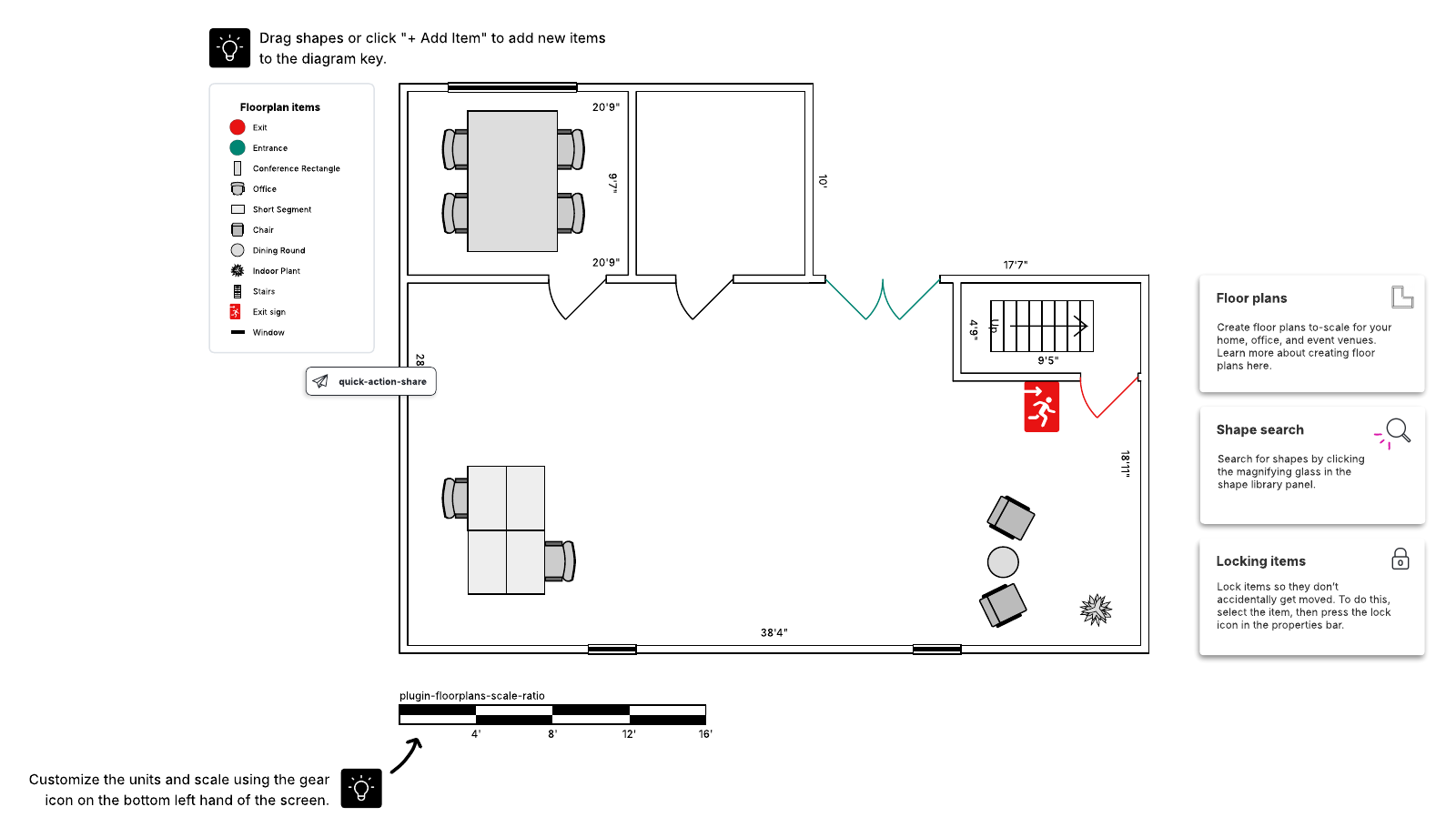
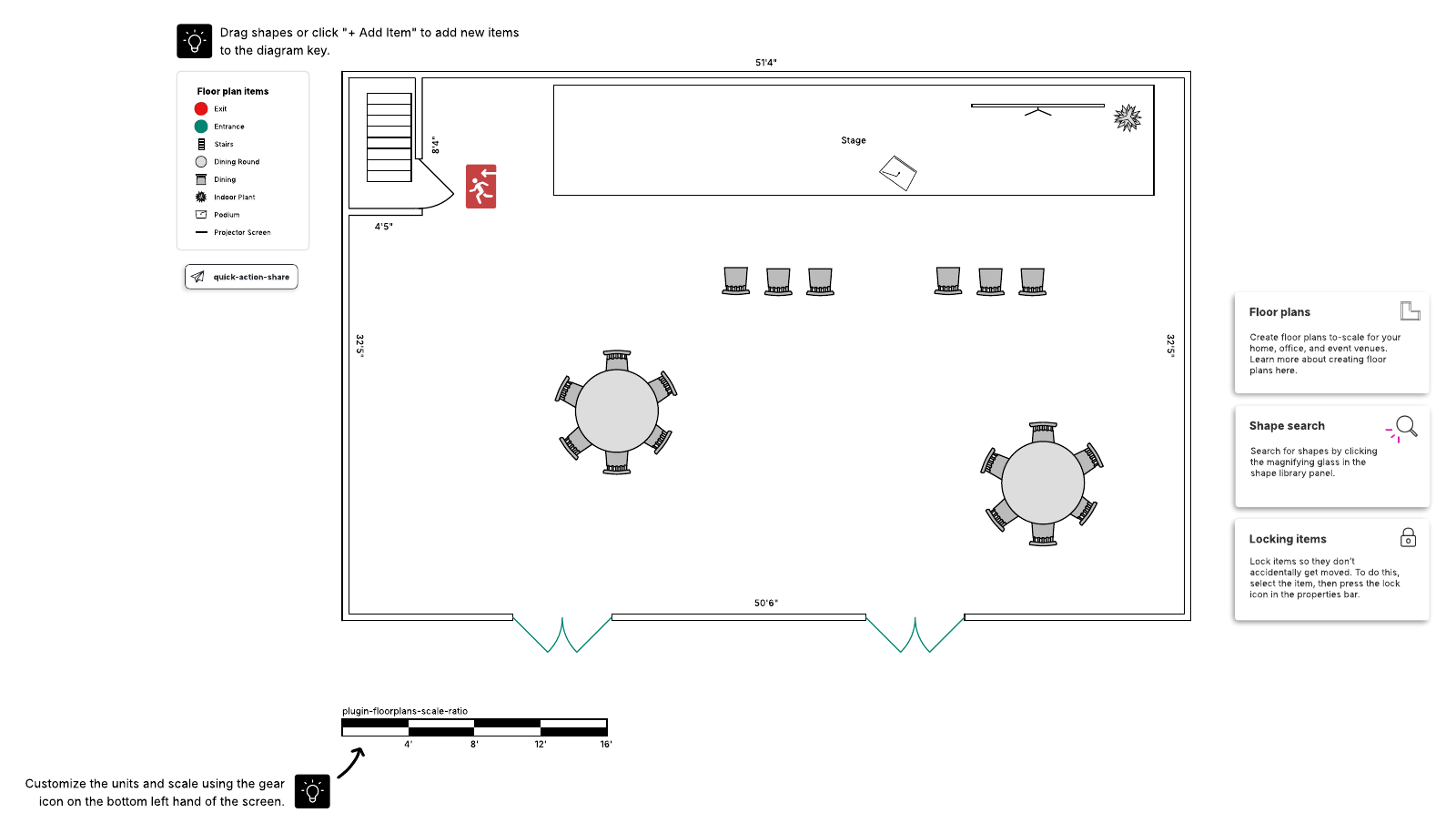
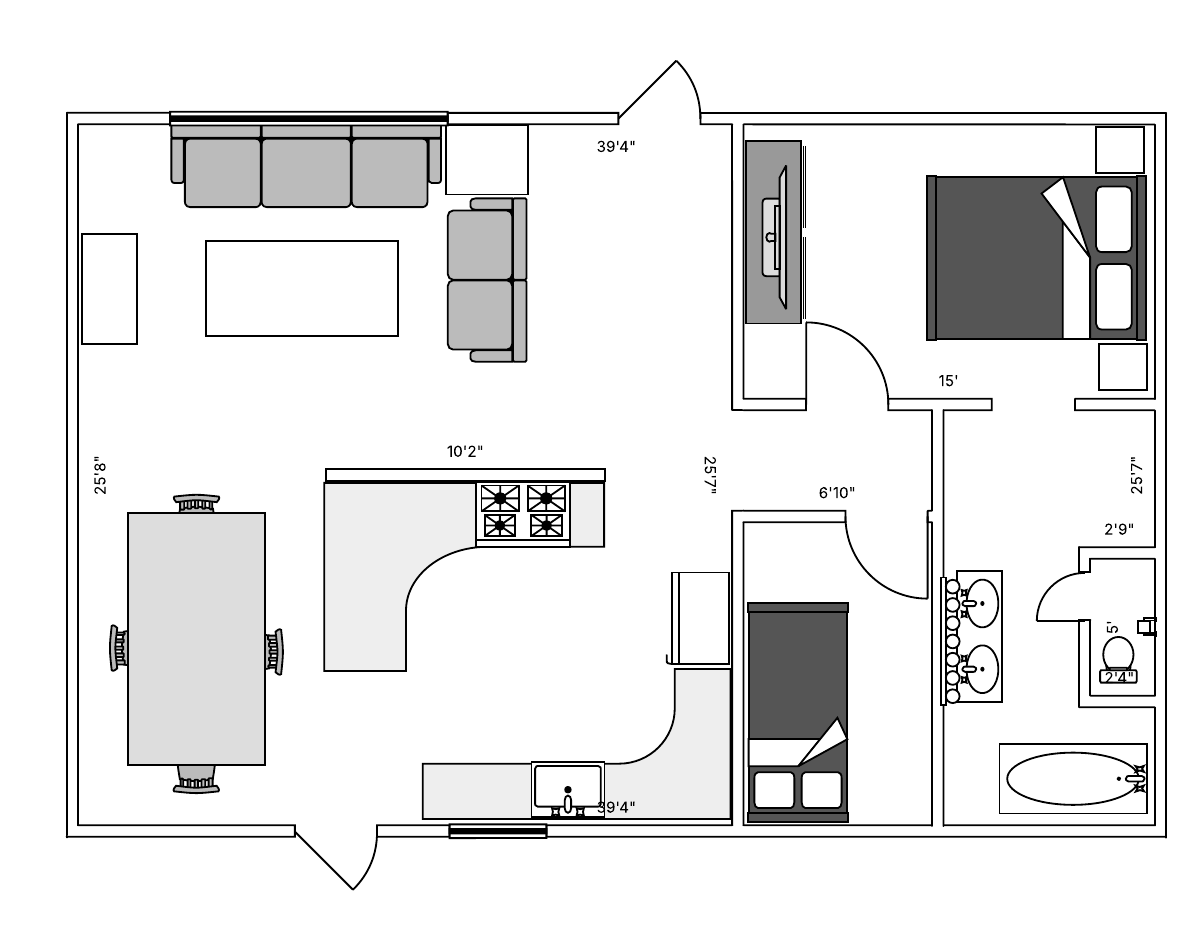
One of the many types of diagrams and visuals you can create with Lucidchart is a floor plan. If you’re looking for professional floor plan software, use this guide to learn about creating floor plans with Lucidchart—and get a step-by-step floor plan layout design guide.
What are floor plans?
Floor plans are scale drawings that show the relationship between rooms, spaces, and physical features viewed from above. They provide a way to visualize how people will move through the space. Floor plans make it easier to check if the space is suitable for its intended purpose, work through any potential challenges, and redesign before moving forward into more elaborate planning or building stages. A floor plan is the place to begin creating and diagramming a logical space based on end-user requirements.
Floor plans vs. building plans
Floor plans show the big picture of living, work, and outdoor spaces. Although they should be scale drawings, floor plans don’t hold enough information for builders to actually construct a home or other structure. Instead, a floor plan is essentially a simple diagram showing room layout and offering a conceptual starting point. A builder needs complete blueprints, or construction-ready drawings, with technical information that you won’t find in most floor plans.
Space planning and circulation in new and existing environments
Space planning is important in new structures, but it’s also important in rethinking existing spaces to determine how to use them more efficiently. Space planning has come into demand as a service by architectural firms because of technological shifts that have led some sectors to downsize or reorganize and others to grow rapidly.
Circulation and traffic flow
In any space where people live, work, shop, or gather, the arrangement within rooms and the flow from one space to another make a difference in the feel and utility of the environment.
Good circulation and traffic flow depend on how the space will be used. For example, in a retail space, you may want to guide visitors through a space, and in an art gallery, you may want traffic to be less restrictive to prevent bottlenecks. Interiors of the same size can feel very different depending on sightlines (the theoretical lines-of-sight of an observer to an object or area being viewed). As a rule of thumb, the fewer visual obstructions in a space, the larger it will appear.
Flow and feng shui
The idea of flow doesn’t simply apply to the physical movement of people through space. Feng shui, or the art and science of creating a harmonious environment, has been in use for over 5,000 years.
Today, feng shui practitioners all over the world use scaled floor plans to design new structures or rearrange existing environments to correspond to the strict rules of the ancient practice. For example, the Disney theme park in Shanghai was built after consultation with feng shui masters.
Seven steps to creating a floor plan to scale for any space
Whether you’re using paper, pencil, and graph paper to help you scale, or an online program to draw up your floor plan, there are some essential steps and items that go into the creation of a solid diagram:
- List requirements. Make a thorough list of the needs and wants of those who will occupy the space.
- Measure. Take correct measurements of these areas and items:
- Outside walls or footprint of your space, any doorways or entries, and windows
- The walls from side to side and from the floor to the ceiling
- Where the electrical outlets, switches, and other controls are located
- Any and all permanent architectural features, including fireplaces, brackets, shelves, benches, and other built-in fixtures
- Surrounding space and outside or overall dimensions of these items
- Objects that will be inside the space
- Scale. Draft your floor plans to scale, which means reducing the size of your drawing so the entire space can reasonably fit on a piece of paper or screen. A common scale is 1/4 inch equals 1 foot. This same scale should be applied to objects such as furniture or exhibit booths that will be included in the floor plan.
- Think about sightlines. Determine what people in the space should see when standing, sitting, or working. Consider windows, doorways, walls, and what makes the most sense for the purposes of the space.
- Render it. With all the components in mind, organize your floor plan.
- Evaluate. Review the wants and needs list. Evaluate the spatial arrangement and analyze circulation. Consider usable space, privacy, and accessibility.
- Share. Send your floor plan to collaborators or stakeholders for review and feedback
Floor plan symbols
Room and office symbols
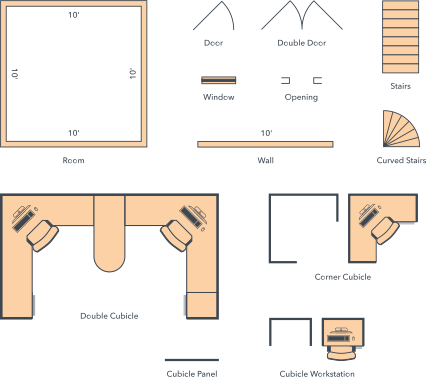
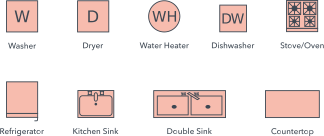
Kitchen and appliance symbols
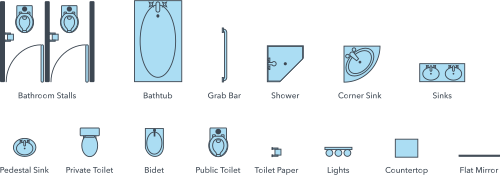
Restroom symbols
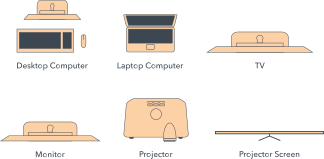
Technology symbols
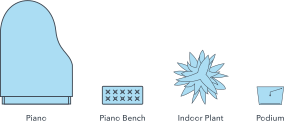
Miscellaneous symbols
Floor plan layout examples
Floor plans are usually thought of as a first step in home or office design, but these fundamental diagrams are used for many other purposes, including garden plans, strategizing emergency exit plans, parking lot planning, and exhibit plans.
Here are some examples of floor plan layouts and their uses:
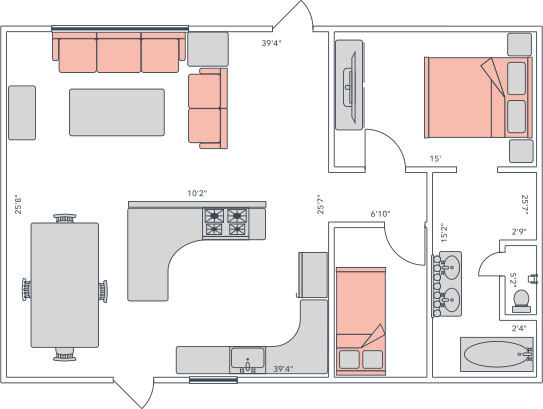
Homes and real estate
Whether they’re renting, buying, or building, consumers understand that a good floor plan can make life more pleasurable and help raise property values. Consequently, floor plans have become primary sales tools for realtors and builders.
Landscape design
Exterior spaces need a plan as much as interior environments. A good plan begins with a detailed inventory and analysis of the site as well as a base map with accurate measurements to plan both the hardscaping—patios, driveway, sidewalks—and future plantings.
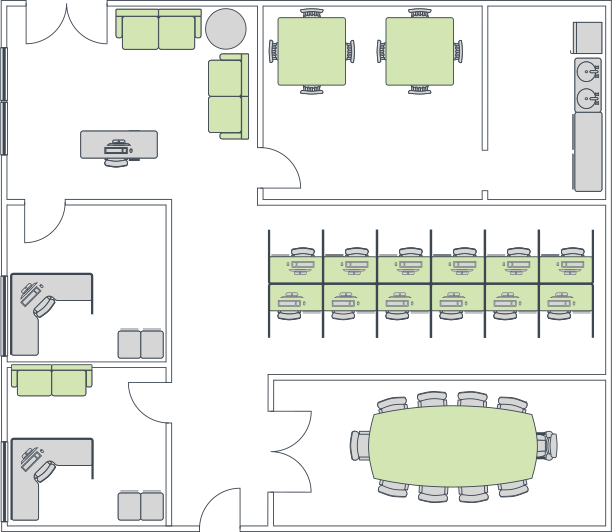
Workspaces
In general, the trend in office spaces has shifted from separate offices to cubicles to open-plan offices. While there are pros and cons to open plans, they’re likely here to stay simply because they cost less to build and can handle personnel changes more easily. No matter what kind of space organizations choose for their staff, floor plans for new or reorganized spaces are a money- and time-saving step that no business can afford to overlook.
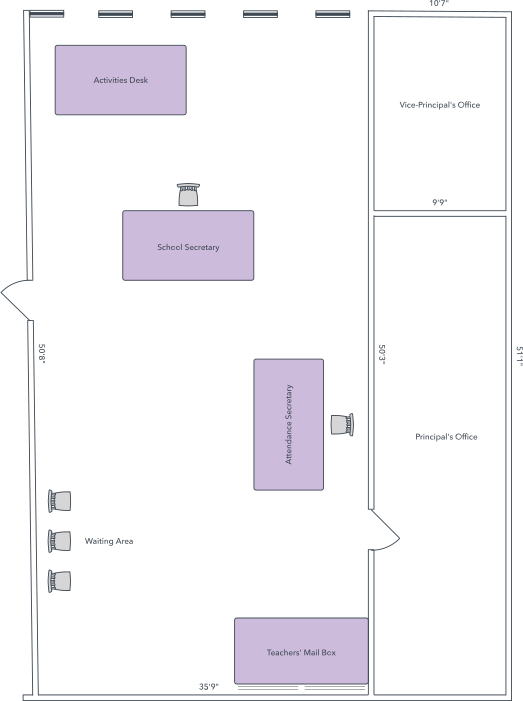
Public spaces
Museums, schools, government buildings, and hospitals require special considerations for safety, security, ingress and egress, work and gathering spaces. Floor plan layout is an important initial step in creating the right kind of space. Having a clear floor plan is also essential in such large spaces to guide the public, either with interactive or printed floor plans. They’re used as a way to establish wayfinding signage.
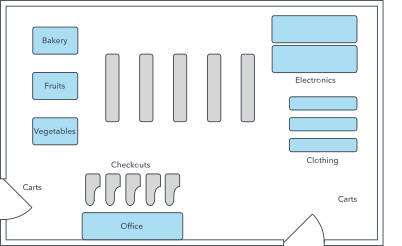
Retail spaces
When it comes to planning retail space, interior layout can be a make-or-break element in profits for stores of any size. For example, research shows that most people turn right when entering a store. Depending on sales goals and the type of store, aisle size and the amount of light and space can be important factors. If customers move through too quickly, they may bypass merchandise, and if they move too slowly, they may become irritated and leave the store. Balance and thoughtful design (and location) are keys to effective retail floor plans that yield profits.
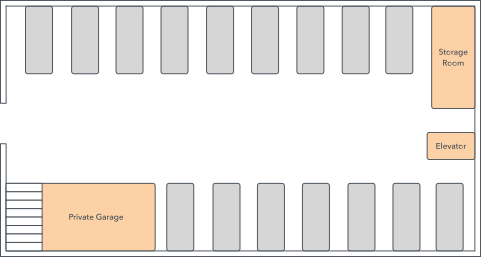
Parking lots
The right type of parking space can make a huge difference to the success of any retail or service environment. While there are specific things to design for depending on the type of structure, environment, and local laws, the objective is to maximize the number of stalls while providing accessible parking spaces and accommodating present and future vehicle dimensions.
Events and exhibits
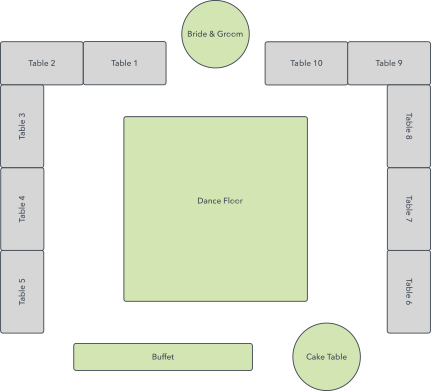
Corporate events, conventions, and even personal events such as weddings need to accommodate hundreds or even thousands of people. That means they must be well thought out to ensure that space is being used effectively. Seating, booth placement, traffic patterns, and crowd dynamics are important for attendees, exhibitors, and vendors. It’s also crucial for caterers, sound and lighting teams, security, and other professionals to work around a well-planned physical space.
Designing your own floor plans with Lucidchart
With Lucidchart, you can design clear floor plans for any space and customize them any way you like. Lucidchart makes floor planning, opens in a new tab quick and easy with:
- Templates to simplify your design tasks: Even if you’re new to floor plans, pre-made, customizable templates get you started in minutes.
- Drag-and-drop shape library: Objects are scaled to size and designed for ease-of-use. Simply drag the shapes you need from the floor plan shape library and drop them in place to get started.
- Real-time collaboration: Lucidchart enables collaborators to view, edit, comment, or chat in real time.
- Sharing and publishing capabilities: Print out PDF, JPEG, and PNG images at the size you need, or share directly with a collaborator or via a share link.
- Visio and Gliffy floor plan import/export: Migrating your old work to one secure location is quick and easy, so editing legacy diagrams in the browser is painless.
- Floor plan app for anytime, anywhere design: Design beyond the desktop with an iOS app you can use via your mobile device or tablet.

Create a floor plan in Lucidchart
Start a free Lucidchart account to build floor plans and design any space.
Sign up free