Enhanced entity-relationship diagrams, or EERDs, are specialized ER diagrams that can be extremely useful for modeling your database. EERDs use several concepts that are closely related to object-oriented design and programming. They build on traditional ER modeling to better represent highly complex systems.
What is an enhanced ER diagram?
Enhanced entity-relationship models, also known as extended entity-relationship models, are advanced database diagrams very similar to regular ER diagrams. Enhanced ERDs are high-level models that represent the requirements and complexities of complex databases. In practice, an EERD includes everything an ER diagram does, but it allows you to capture additional detail when a simple ERD becomes too limiting.
In addition to the same concepts that ordinary ER diagrams encompass, EERDs include:
-
Subtypes and supertypes (sometimes known as subclasses and superclasses)
-
Specialization and generalization
-
Category or union type
-
Attribute and relationship inheritance
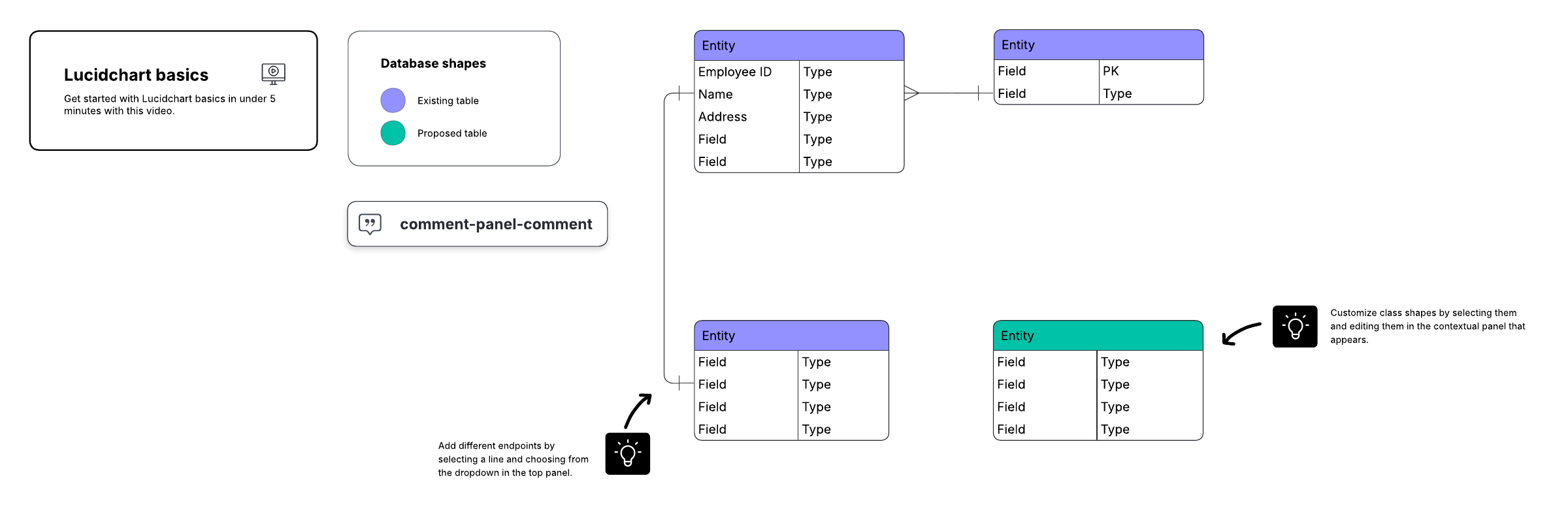
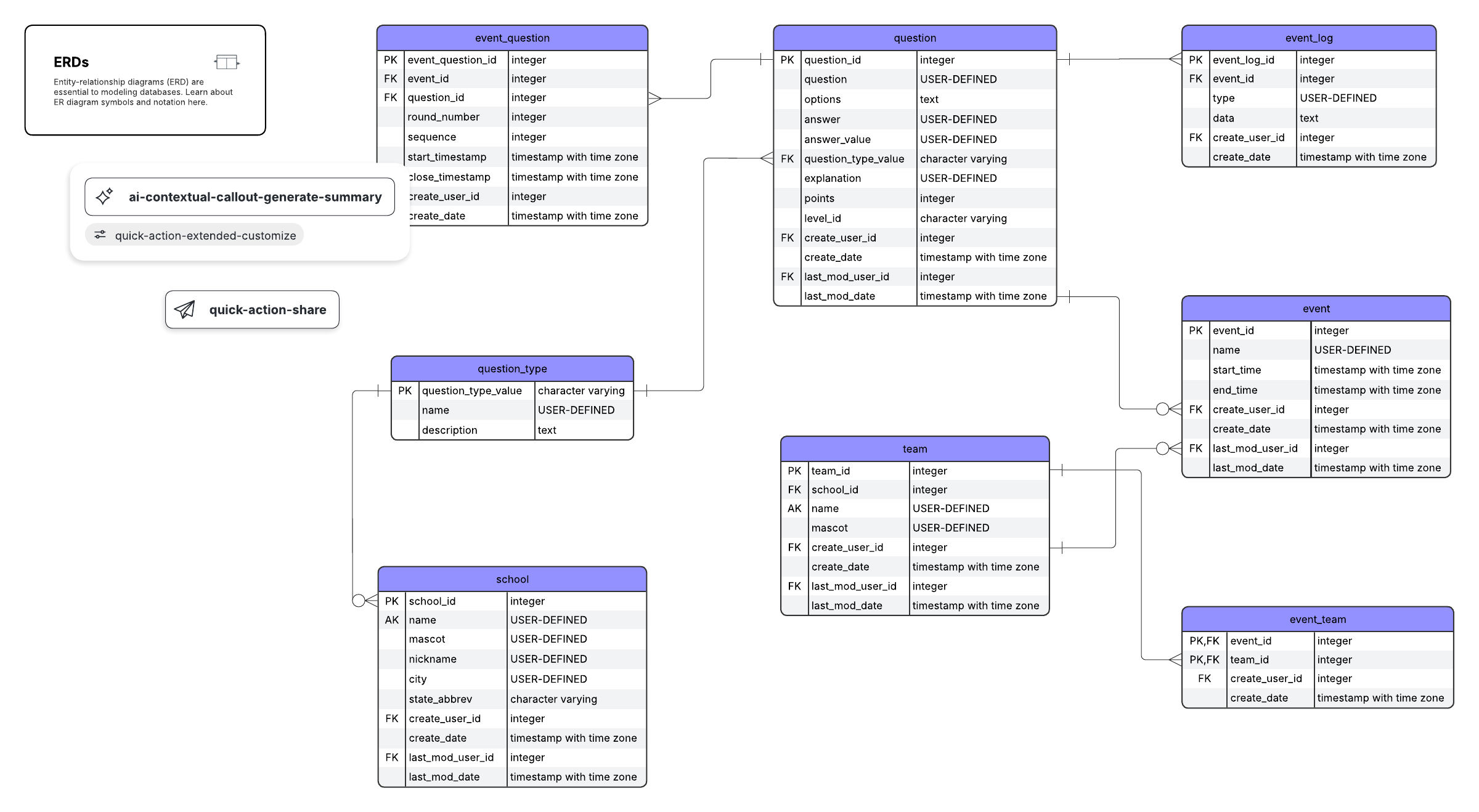
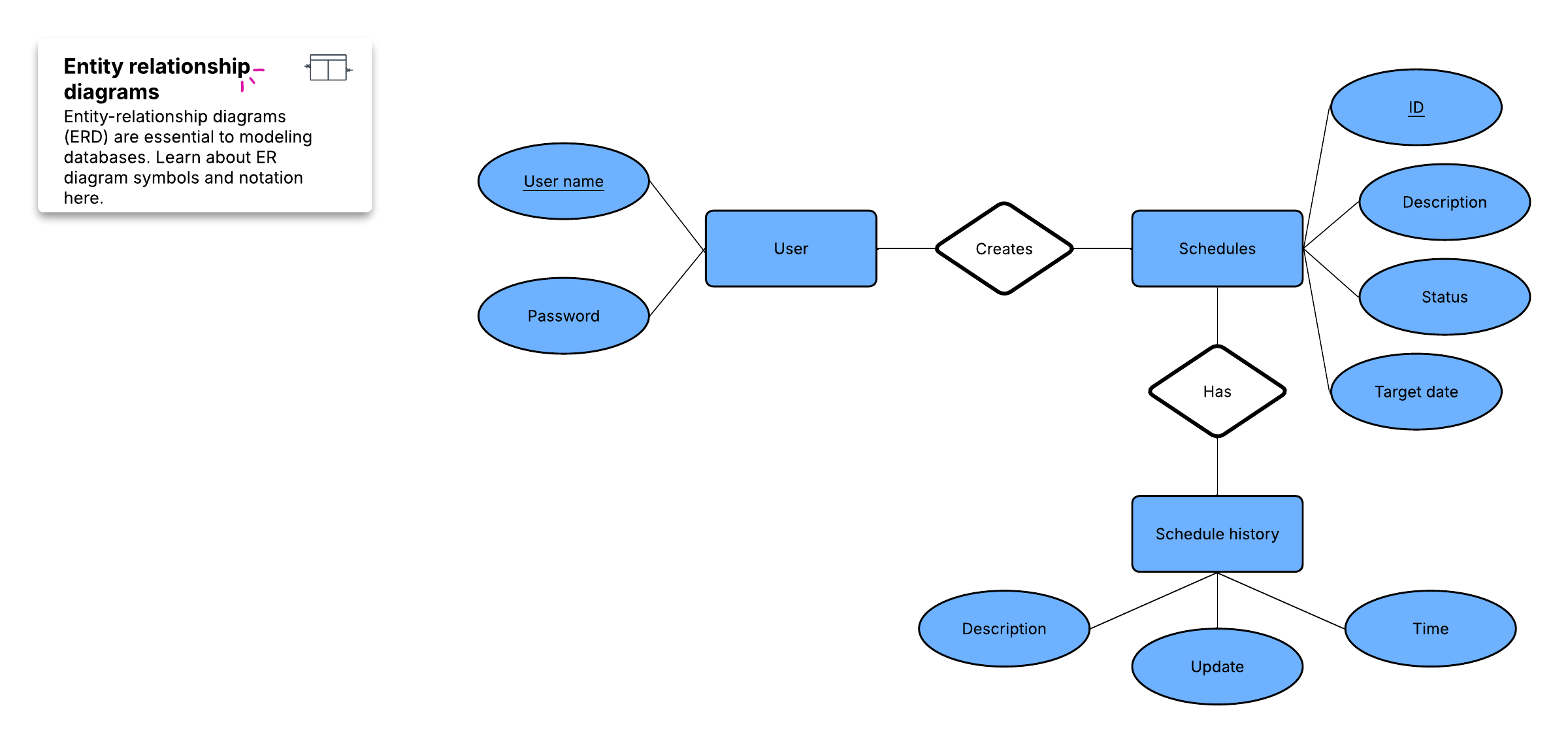
Because EERDs extend ERDs rather than replace them, it helps to remember what ERDs typically contain (entities, attributes, and relationships) and then view EERD features as the extra structure that supports richer modeling.
Enhanced ERD definitions and examples
The definitions of the concepts listed below are unique to enhanced entity-relationship diagrams and can help clarify how the modeling concepts of EERDs differ from those of ERDs.
As a reminder, ER diagrams commonly model elements such as entities, attributes, relationships, weak entities, multivalued attributes, and weak relationships. EERDs add constructs such as inheritance hierarchies and category subtypes to represent more complex requirements.
Supertypes and subtypes
-
Supertype (superclass): an entity type that relates to one or more subtypes
-
Subtype (subclass): a subgroup of entities with unique attributes
-
Attribute inheritance: the concept that subtype entities inherit the values of all supertype attributes
For example, say you have an employee database at a hospital. The parent entity (or the supertype) could be medical staff, which includes attributes like employee ID and the date they began working at the hospital. The child entities (subtypes) could include doctors and nurses, which would inherit those same attributes. This kind of parent/child structure is a classic EERD use case because it reduces redundancy while keeping the model aligned with how the real world is organized.
Generalization and specialization
-
Generalization: the process of defining a general entity type from a collection of specialized entity types
-
Specialization: the opposite of generalization, since it defines subtypes of the supertype and determines the relationship between the two
In the example above, the parent entity is a generalized category, while the child entities are specialized entities, or types of medical staff. Creating this inheritance hierarchy reflects the true nature of the hospital data, eliminates redundancies, and makes the database design more consistent.
Constraints
-
Disjointness constraints: You will need to decide whether a supertype instance may simultaneously be a member of two or more subtypes. The disjoint rule requires that subclasses have disjoint sets of entities. The overlap rule forces a subclass (also known as a supertype instance) to have overlapping sets of entities.
-
Completeness constraints: Decide whether a supertype instance must also be a member of at least one subtype. The total specialization rule demands that every entity in the superclass belong to some subclass. As with a regular ERD, total specialization is indicated by a double-line connection between entities. The partial specialization rule allows an entity to not belong to any of the subclasses. It is represented by a single-line connection.
Subtype discriminators
A subtype discriminator is an attribute of the supertype that indicates an entity's subtype. The attribute's values are what determine the target subtype.
-
Disjoint subtypes: simple attributes that must have alternative values to indicate any possible subtypes
-
Overlapping subtypes: composite attributes whose subparts pertain to various subtypes. Each subpart has a Boolean value that indicates whether or not the instance belongs to the associated subtype.
EERDs can also represent additional complexity through categories (sometimes called union types), which let you divide an entity into subtypes based on specific attributes, supporting deeper specialization when a single inheritance path isn't enough.
Creating an effective EERD
A well-designed EERD will help you build long-lasting, useful storage systems. Consider the following when evaluating your entity relationship diagram to be sure that you're modeling a system design that will meet the requirements of your business:
-
Stability: Will the diagram support changing business needs?
-
Breadth: Can all of the data that we need to store be organized in the model?
-
Flexibility: Can data in this model be reorganized to support new information requirements?
-
Efficiency: Is this model the simplest solution possible? Is the data modeled with the appropriate symbols?
-
Accessibility: Can both creators and end users easily understand your EERD?
-
Conformity: Will the model integrate easily with your existing database structure?
It can also help to choose the right level of modeling detail up front: ERDs are often best for simpler systems or high-level overviews, while EERDs are typically better for capturing complicated relationships, like inheritance hierarchies, category subtypes, and relationship attributes, and supporting stronger overall data integrity.
Limitations of ER and EER diagrams
ER and EER diagrams are only useful for relational, structured data. If you're working with a non-relational database or unstructured data that isn't delineated into different fields, rows, or columns, these models will do you little good—it's just not what they're for.
How Lucidchart can help
Lucidchart is a powerful, intelligent diagramming application designed to help teams visualize, design, and manage complex database structures. By prioritizing dynamic features to help your teams maintain alignment, you can create professional ER or EER diagrams.
Here are some tips for streamlining your diagramming process:
-
Jump-start with templates: Access Lucid’s library of professional templates to quickly create an ERD or EERD without starting from scratch.
-
Automate ERD creation: Use the ERD import feature to automatically generate diagrams from your existing database, visualizing your current state without manual drawing.
-
Use specialized shape libraries: Use dedicated shapes for ERDs and EERDs, including standard notations for entities, attributes, and relationships, to ensure technical documentation remains polished and accurate.
-
Identify complex dependencies: Map out intricate relationships between components to identify potential bottlenecks early in the development life cycle.
-
Lead collaborative reviews: Invite team members to edit your document in real time. Use @mention and comments to facilitate feedback directly on the canvas, ensuring cross-functional alignment on your database architecture.
-
Maintain a single source of truth: Store and manage your technical blueprints in a unified, cloud-based workspace, ensuring every stakeholder can access the most up-to-date documentation.
Whether you're designing a database from scratch or simply trying to better understand the one you have, an ER diagram or EER diagram can be a useful tool. Use it to see the bigger picture of what's going on, and let Lucidchart do the heavy lifting so you can focus on the work that matters most to you.
Everything you need to make a diagram
Make a polished, professional diagram for free with Lucidchart. No matter what you have in mind, we have the tools you need to build it. Make an account and start diagramming today.
Sign up free