
Is your to-do list so overwhelming that you have no idea where to even start? With countless tasks needing to be completed it can feel almost impossible to get anything done. The solution to this struggle might just lie in the past.
Dwight D. Eisenhower, the 34th president of the United States, was known for his proficient time management. Since running the country is no small task, Eisenhower created a powerful way to prioritize various tasks so he could focus on what was most important.
What is an Eisenhower Matrix?
The Eisenhower matrix, also known as the “Eisenhower table”, is a simple decision-making tool that helps you prioritize various tasks based on urgency and importance. The matrix consists of four quadrants:
Quadrant 1: Important and urgent
Quadrant 2: Important but not urgent
Quadrant 3: Urgent but not important
Quadrant 4: Not important, not urgent
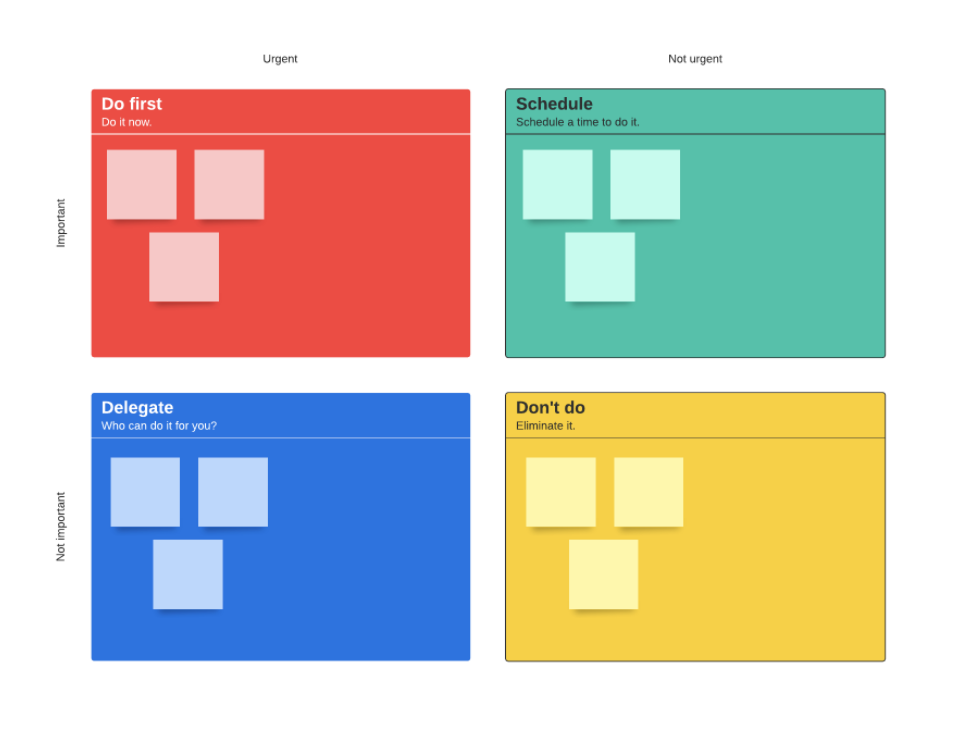
Urgent vs Important Activities
The key to understanding the Eisenhower method is learning the difference between “urgent” and “important” tasks.
Important: Important tasks line up with your values and help you achieve your main goals. They often focus on the long term and may not produce results immediately. This makes it easy to neglect them in the short term for more urgent tasks.
Urgent: Urgent activities are time-sensitive, requiring immediate attention. By putting off important tasks long enough, they eventually become urgent—creating stress and pressure to finish them on time.
An Eisenhower Matrix requires us to define which tasks are urgent and which are important. Once you know where each task fits, you can prioritize your tasks and work more efficiently.
How to Use an Eisenhower Matrix
Each quadrant in an Eisenhower Matrix represents a different level of priority. By evaluating which tasks are important, urgent, or a combination of the two, you can then decide how to best manage them.
Quadrant 1: Do first
Quadrant 1 contains your “important and urgent” activities. These are tasks that have both high importance and urgency.
Focus on completing these tasks first. There are usually two types of tasks that end up in this quadrant: tasks that you couldn’t foresee and tasks that you procrastinated. As you fill out this quadrant, consider which tasks you left to the last minute and plan how to avoid procrastinating them again in the future. One method to reduce future stress is to provide yourself extra time in your schedule to account for unforeseen tasks and give you a buffer for any work that’s fallen behind.
Quadrant 2: Decide when
Quadrant 2 includes “important but not urgent” activities.
In other words, you need to complete them someday, but there isn’t an immediate deadline for them. These tasks help you achieve your goals, but they are often neglected because they aren’t urgent. To avoid procrastination, decide when you will work on each task. Define clear deadlines to help build these activities into your schedule.
Quadrant 3: Delegate
Quadrant 3 is where many people get stuck. This is the “urgent but not important” section.
These tasks typically prevent you from working toward your main goals. Tasks in this quadrant often come from other people. For example, your co-worker may ask you to review a presentation for them that is due in a couple of hours but doesn’t apply to your areas of responsibility. Try to minimize working on these types of tasks by politely declining or delegating them when possible.
Quadrant 4: Do it later or eliminate
Quadrant 4 contains the lowest priority items. These are the “not important and not urgent” activities.
Ultimately, these items serve as a distraction to your important tasks. The best solution is to eliminate them from your priorities altogether or push them back to a better time to finish them—ideally when you don’t have as many important tasks to work on.
Eisenhower Matrix Best Practices
An advantage of the Eisenhower priority matrix is that it is simple to use. Follow our best practices to further enhance your use of the tool.
1. Color-code
Color-coding each quadrant can help you quickly scope what’s next on your list. You can customize your matrix with colors of your choice, or follow our simple method below:
Red: Urgent and important tasks (Do immediately)
Yellow: Important, not urgent (Decide when)
Green: Urgent, not important (Delegate)
Gray: Not important, not urgent (Do it later or eliminate)
2. Limit each quadrant to 10 items
An excess of tasks can overwhelm you and make it difficult to complete them on time. To help follow deadlines, limit each quadrant to no more than 10 tasks. Ideally, try to focus on just 5 to 7 tasks in each quadrant.
3. Eliminate and then optimize
It’s easier to optimize your time if you have fewer things to manage. As you fill out your quadrants, focus on removing the clutter. Look for tasks you can delegate or eliminate altogether. By doing this first everything else on your list will become a lot easier.
Eisenhower Matrix Template
Time management can be difficult. Use Lucidspark’s online Eisenhower matrix template to help increase your productivity while focusing on the things that matter most.
Lucidspark is a collaborative virtual whiteboard tool that helps teams see the future and bring the best ideas to life. Host dynamic brainstorming sessions on an infinite canvas to turn insights into action. Get started now by signing up for an account.
Increase your productivity while focusing on the things that matter most.
Try our Eisenhower matrix template
