
We've all been a member of a team project and felt like our voice and ideas were undervalued at one time or another. Maybe the group's goals were unclear, communication channels were muddied, or team member's unique strengths went unused. It's tough for a team to achieve its goals if they can't collaborate well.
Assembling a strong, driven group of talented people is only half the battle. Setting up supportive and engaging collaboration practices will allow your team members to thrive and for innovative ideas to flourish. Clear communication methods and protocols allow new solutions to be discovered and encourage an environment of teamwork instead of competition.
Let's explore a few strategies and collaboration best practices that improve the way work happens at your organization.
Set clear goals and expectations
Setting clear goals and realistic expectations inspires and aligns teams. Defined objectives and key results give your team clear benchmarks to guide them to the collective goal.
Create compelling objectives
Clearly stating the goal of a project is only one piece of the puzzle. Presenting your team's objective in compelling and captivating terms will inspire your group to accomplish their mission. Your team should completely understand the goal and be excited about the objectives!
Define individual roles, responsibilities, and goals
Defining individual roles and responsibilities for each team member encourages employees to be accountable and take ownership of their roles. Provide key outcomes for each team member and explain why each is important to the larger goal of the group.
Make sure everyone has the chance to participate in meetings
Meetings should be an opportunity for all team members to feel valued and heard. Creating an environment where employees feel welcomed to share their opinions amplifies new ideas and encourages communication and connection between team members.
Use agendas
Before meetings, provide an agenda of the goals and objectives for the session. Even a broad outline can be helpful to give team members an idea of how a meeting will be structured. This gives attendees time to prepare ideas and questions, resulting in better input and a more focused timetable for the meeting.

Question-based agendas can increase meeting productivity. Learn how to create one here.
Go nowEncourage discussion, discourage interruptions
Everyone communicates differently; that's why many team leaders ask that the group refrain from interruptions at the onset of every meeting. If a team member has an idea to pitch to the group, they must get a chance to finish their thought in full. Avoiding interruptions is the best way to ensure that and helps maintain a comfortable environment where your team can share ideas.
Team leaders should be confident in asking open-ended questions or requesting feedback. This encourages a discussion among team members and allows for more voices to be heard.
Alternate meeting formats
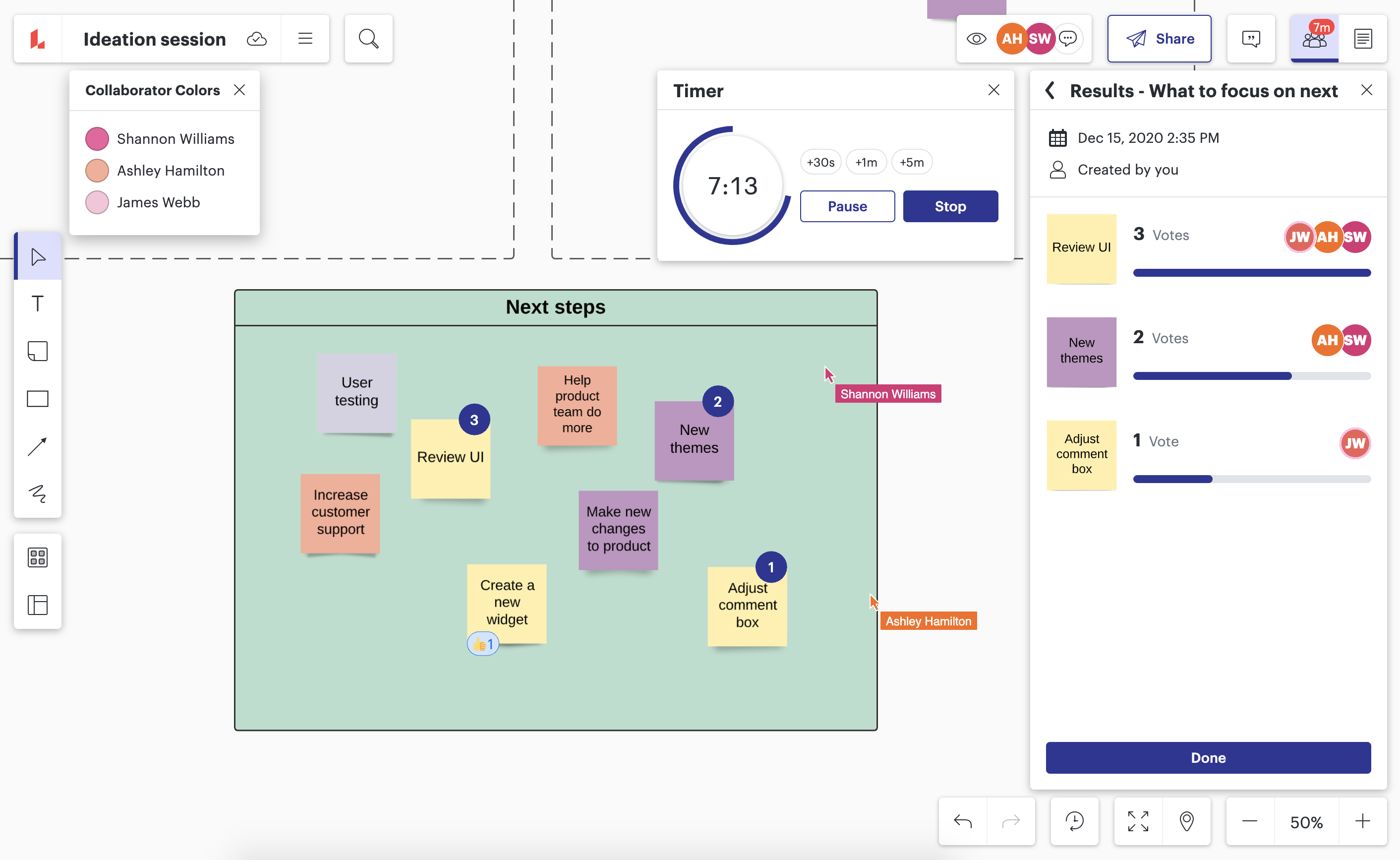
Switching up meeting formats also gives different personality types among your team opportunities to engage with the group. Ask a question and go around the table to elicit feedback. Set up a "progress check" in a group setting or one-on-one meetings with each staff member. Provide digitally collaborative ways to participate and gain feedback, such as Lucidspark, where everyone can brainstorm as one and vote on collective ideas, whether in person or remote.
Include different perspectives in projects and decision-making
We know that seeking input from diverse perspectives creates a more cohesive and successful team. It’s important to be the kind of leader that understands the strengths of their team and builds a trusting environment.
Play to team member strengths
Leveraging team member's unique strengths empowers each employee, as well as the overall group. To tap into your team member's talents, many team leaders have employees take a personality test or conduct a roundtable discussion in which the team is encouraged to share their strengths. These activities serve as bonding exercises between employees and allow team leaders to test drive strengths before assigning roles.
Team members can share anecdotes or philosophies on how they might have shown invaluable strengths such as communication, problem-solving, tenacity, or planning. When team members are given agency in naming and then playing to their strengths, they are more likely to be engaged and committed to the team's success.
Build trust and cohesion
Creating an open and trusting environment among your team starts with transparency and respect. Early in the process, it's important to display accountability and communication. Working as a team is full of vulnerable moments,and leaders should be honest in their expectations, feedback, and even owning mistakes. Candor and trust in leadership helps establish an environment where employees can feel comfortable.
Relying on team members to make decisions both large and small has been proven to improve performance in employees because they know their value within the group. Task updates and daily huddles among team members also create inclusion, cohesion, and increased accountability.
Lead by example
Set the tone of what you expect from your team and guide them by example. Each day is an opportunity to build a culture of confidence and accountability through your own actions.
An effective leader follows through on promises, even ones as small as the starting meetings on time. Likewise, productive energy and a positive attitude can help motivate a team to accomplish tasks with enthusiasm.
Recognize and celebrate collaborative efforts
Recognition is an essential part of team performance. When a goal is achieved, recognition by the team leader is a chance to bring your team together to celebrate a collective accomplishment. Unfortunately, many employees feel that their efforts go unnoticed or are flat-out ignored by their superiors, making it all the more important to commemorate hard work when your team achieves it.
A Gallup workplace survey found that some of the most impactful forms of recognition employees look for have very little to do with money. "It can be as small as a personal note or a thank-you card. But the key is to know what makes it meaningful and memorable for the employee."
When employees were asked what types of recognition were the most memorable to them personally, respondents pointed to six methods in particular:
- Public recognition through a publicized award
- Private acknowledgment from a boss, peer, or customer
- Recognition for high achievement during evaluations or reviews
- Promotion or increased responsibilities to demonstrate trust
- Monetary awards like a trip or a pay increase
- Pride in work and personal satisfaction
Hard work deserves to be valued and celebrated! Whether it's taking an employee out to lunch to celebrate an achievement or honoring an entire team on a completed project, recognition goes a long way when it's been earned.
A collaborative work environment creates more opportunities for innovative ideas, increases productivity, and allows employees to feel part of something bigger than themselves. The strongest cultures of collaboration find new ways to create space for everyone to be successful.

Looking for team collaboration tools? Check out this list of some of the best options.
Read more
