
It’s virtually impossible to deliver a high-quality product or customer experience without good internal communication. If the cogs on the inside of the company aren’t ticking just right, it will be obvious from the outside.
And yet communication is often taken for granted. In a professional setting, everyone knows how to communicate, right? It turns out, it’s not that simple. Left to our own devices, we tend to stick with the forms of communication, opens in a new tab we’re most comfortable with. You may like email, but maybe Jeff in QA prefers to talk in person. And maybe Linda prefers Slack. The point is, there’s no consistency in the way information is communicated and documented.
This lack of consistency is actually a pretty serious issue. Without consistency and established routines, it’s easy for people to fall out of the loop. Conversations with key stakeholders might never happen. And if they do happen, all of the key points might not be covered.
To avoid this, you need a plan—an internal communication strategy. In this post, we’ll give you a set of tips and tricks for how to improve internal communication in your own organization. But first, let’s take a look at why internal communication is so important.
Importance of internal communication
Internal communication planning takes time—time that could be spent doing any number of other valuable work activities. So why should you prioritize creating an internal communication strategy? Think of it as an investment. Sure it takes a little bit of time now, but in the long run it will save time and, quite possibly, money.
A 2023 Forbes Advisor survey found that ineffective communication negatively impacts productivity, job satisfaction, stress levels at work, and even trust in leadership.
These issues can be further exacerbated by today’s modern hydrid workplace. With more than half of the workforce working from home at least part of the time, digital communication has increased dramatically. And the results are mixed. Nearly half of workers feel more connected to their team through digital communication. On the other hand, many feel they must also be more available, leading to 60% of workers feeling increased burnout from communicating digitally.
Without clear internal communication standards and routines, you risk miscommunication, information gaps, inefficiency, poor engagement, and suffering morale.
Past studies have shown that companies with effective communication boast much higher returns to shareholders than companies with poor internal communication.
That point alone might be enough to sell you on imptoving internal communication plans, but let’s unpack it a little bit more. Why might effective communication lead to greater returns? It has everything to do with your employees, their engagement, and their overall satisfaction.
A well-documented internal communication strategy ensures that your company’s (or team’s) communication practices are clear, effective, and consistent. And this naturally makes your employees’ lives easier. The communication strategy tells them how and when information will be communicated, so everyone knows what to expect.
In fact, 42% of workers report effective communication improves cross-functional collaboration.
Internal communication planning also encourages employees to, well, communicate with each other. This facilitates employee engagement, builds stronger teams, and helps improve workplace productivity.
8 tips for improving internal communication
We’ve covered the “why” behind creating an internal communication strategy, now let’s take a look at the “how.” Whether you’re looking to improve internal communication and don’t know where to start, or you’re a seasoned communications expert looking for a new approach, you’re in the right place.
As you begin the planning process, keep these eight internal communication tips and best practices in mind.
1. Review your current communication processes
Before making any changes, small or drastic, you need to know what you’re changing. When workflow experts seek to improve a business process, they start with “as-is” analysis, opens in a new tab. You can apply a similar approach to your communication processes.
Take stock of any current communication practices your team or company currently uses and document them. These could be formal processes such as sprint review meetings, or informal processes such as conversations over coffee and email exchanges.
As you start to get a sense for your current processes, you’ll likely begin to identify areas in need of improvement. Take note of those ideas and reference them later.
2. Create cross-functional teams
You can create an internal communication strategy for a specific team, but the benefits will be more widespread if you make it a company-wide initiative. This requires a cross-functional team.
As you develop a company-wide communication plan, you’ll need input from individuals throughout the company, especially those in leadership positions. Gather a team of individuals from a variety of departments and teams and involve them in the communication planning process.
3. Get employee buy-in
One of the primary benefits of effective internal communication is increased employee engagement. But remember, people are resistant to change. If you’re going to overhaul your company’s communication processes, you might rock a few boats.
That being said, you also want your employees on board with the new changes. To ensure employees buy into the new processes, opens in a new tab, give them opportunities to provide feedback and take their input to heart. If employees feel involved in the process, they’re much more likely to accept and appreciate your company’s new communication protocols.
4. Know your employees
This one goes hand-in-hand with the last point. You know how your marketing team targets certain personas as they try to sell your product? You should do the same as you create a communication plan.
Think of your employee base in terms of their goals, skills, attitudes, likes, dislikes, and more. What groups emerge? Use these groupings to create employee personas, or profiles of imaginary employees that represent larger groups of like-minded employees at your company.
Try to consider each persona as you create your internal communication strategy. This will help increase employee buy-in and keep your strategy employee-focused.
5. Set internal communication objectives
Like any other process or initiative, changing your communication processes can take time. And the longer it goes, the more likely it is to be left incomplete or put on the backburner. To avoid this, momentum is crucial.
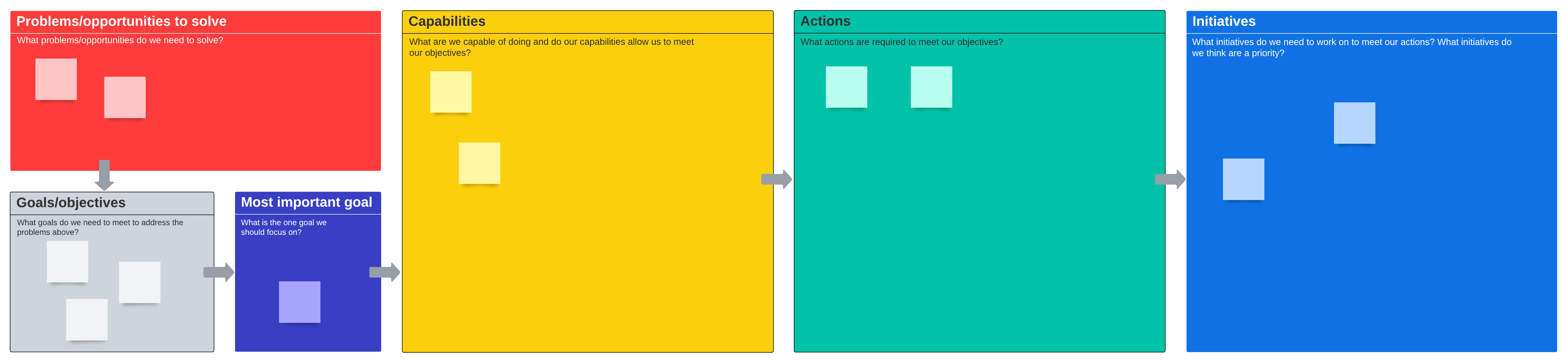
Set clear objectives for your communication plan and outline strategies for achieving them. Be sure to include timelines to establish accountability.
Consider using a strategic planning template to help you identify objectives.
6. Don’t just talk to your audience, listen
At this point, we may sound like a bit of a broken record. But it’s worth saying again: listen to your employees. As you overhaul your communication processes, be sure to keep a two-way channel of communication open. Be transparent about what you are doing and why. Encourage employees to take action and ownership for improvement.
And, at every point of the way, remember to ask for employee feedback. Their input is one of your most valuable resources.
7. Align internal messaging with external goals
When it comes to company messaging, consistency is key. The values, practices, and goals you are communicating internally to your employees should always align with and reflect your external goals and values.
Employees can’t deliver a consistent, on-brand experience or product to customers if they are not receiving consistent, on-brand input themselves.
8. Use collaborative software instead of meetings
Business meetings are the bane of all too many employees’ existences. How many times have you been in a meeting that could’ve been an email? Too many, that’s for sure.
Increasing and improving internal communication does not always mean scheduling more meetings. I’ll let you read that again. Often, it means replacing meetings with other, more effective avenues of communication.
Whiteboard online in real time with Lucidspark. Facilitate meetings and brainstorming sessions remotely, then give employees access to that whiteboard after the fact, allowing them to digest information on their own time. And the best part? You can get started for free.

Take team communication to the next level with these effective strategies
Read more