Have you struggled to build trust among your team? Maybe some team members have expressed that they feel they can’t bring their authentic selves to work, or your team is operating on artificial harmony while behind the scenes, people are avoiding conflict and accountability with each other. In a recent study conducted by Lucid, only 46% of respondents felt that their team members supported respectful and collaborative interactions.
In these cases, what your team is missing is psychological safety. Psychological safety is critical for team performance and overall cohesion, but it takes intentional action to make sure that people feel comfortable and authentic at work. Due to the rise of hybrid and distributed teams, an intentional approach to cultivating psychological safety is more important—yet more challenging—than ever.
In this blog post, we’ll walk you through exactly what it means to build psychological safety in the workplace and provide you with clear steps to establish and foster a work environment where everyone feels supported.
What is psychological safety?
At work, a psychologically safe work environment is an environment that’s respectful, trustworthy, and supportive. Team members feel that they can speak up, seek help, share ideas, admit mistakes, and express concerns without fear of retribution. A safe, supportive work environment leads to stronger collaboration and enhanced team cohesion.
“Psychological safety is the level of comfort that team members have with openly expressing their authentic feelings and opinions. When people feel psychologically safe, they believe that they can voice their thoughts freely and express genuine emotion.”
—Kelly Nikolai, associate solutions consultant, Lucid
A key aspect of psychological safety is that it begins with leadership. When leaders express authenticity and vulnerability, they create a precedent that makes others feel comfortable enough to do the same. Essentially, psychological safety is about more than fostering trust—it also involves genuine, active listening and empathizing with team members.
Leaders who successfully establish psychological safety often exhibit the following leadership qualities as they:
-
Are responsive and collaborative
-
Share information and value transparency
-
Have an intentional focus on people and culture
-
Cultivate a beginner’s mind as they emphasize potential and autonomy

How Agile leaders foster psychological safety
Learn the key differences between traditional and Agile leadership and how Agile management cultivates psychological safety.
Learn moreWhy it’s important to have psychological safety
When people don’t feel respected or supported at work, this often leads to feelings of avoidance and fear, fueling common team dysfunctions such as absence of trust, fear of conflict, and lack of commitment. And, according to a recent report by the American Psychological Association (APA), 57% of employees who experience low psychological safety say that their work environment has a negative impact on their mental health.
By fostering psychological safety, leaders don’t just help team members feel safe on an individual level; they also help enhance the cohesiveness and performance of the entire team. When psychological safety is present, this leads to:
-
Committed and engaged teams
-
Enhanced clarity and decision-making
-
Healthy, respectful conflict that builds meaningful relationships
-
Increased innovation and better business outcomes
In a psychologically safe work environment, teams emphasize collective success and hold each other accountable. By feeling safe to be their authentic selves, team members are able to support each other while focusing on high-value work. Remember, psychological safety begins with leadership—so we’ll break down exactly how you can foster psychological safety and ensure that your team members work in a safe, supportive environment.
How to create psychological safety at work: Strategies and steps for leaders
How do leaders make sure that team members feel comfortable and supported? Here’s how you can build psychological safety in five steps.
Step #1: Lead by example
Leading by example is perhaps the most important step to fostering psychological safety. In order for team members to feel comfortable expressing their authentic feelings and opinions, their leaders need to show that expression is not only welcomed but practiced by everyone, regardless of role or seniority.
Leading by example means demonstrating the work ethic or behaviors that the team can expect. This involves effective communication, being respectful, and having accountability. It can be as simple as admitting that you are running behind on your tasks or are taking time off for a mental health day. By showcasing honesty and vulnerability, leaders signal that it’s okay—and even welcomed—to tell the truth about what’s happening behind the scenes, making others feel safe to do the same.
“It really starts with leaders,” Nikolai emphasizes. “Then it dominoes into the team. If a leader is not willing to share trust or admit fault, then it’s very difficult for anyone to be honest.”
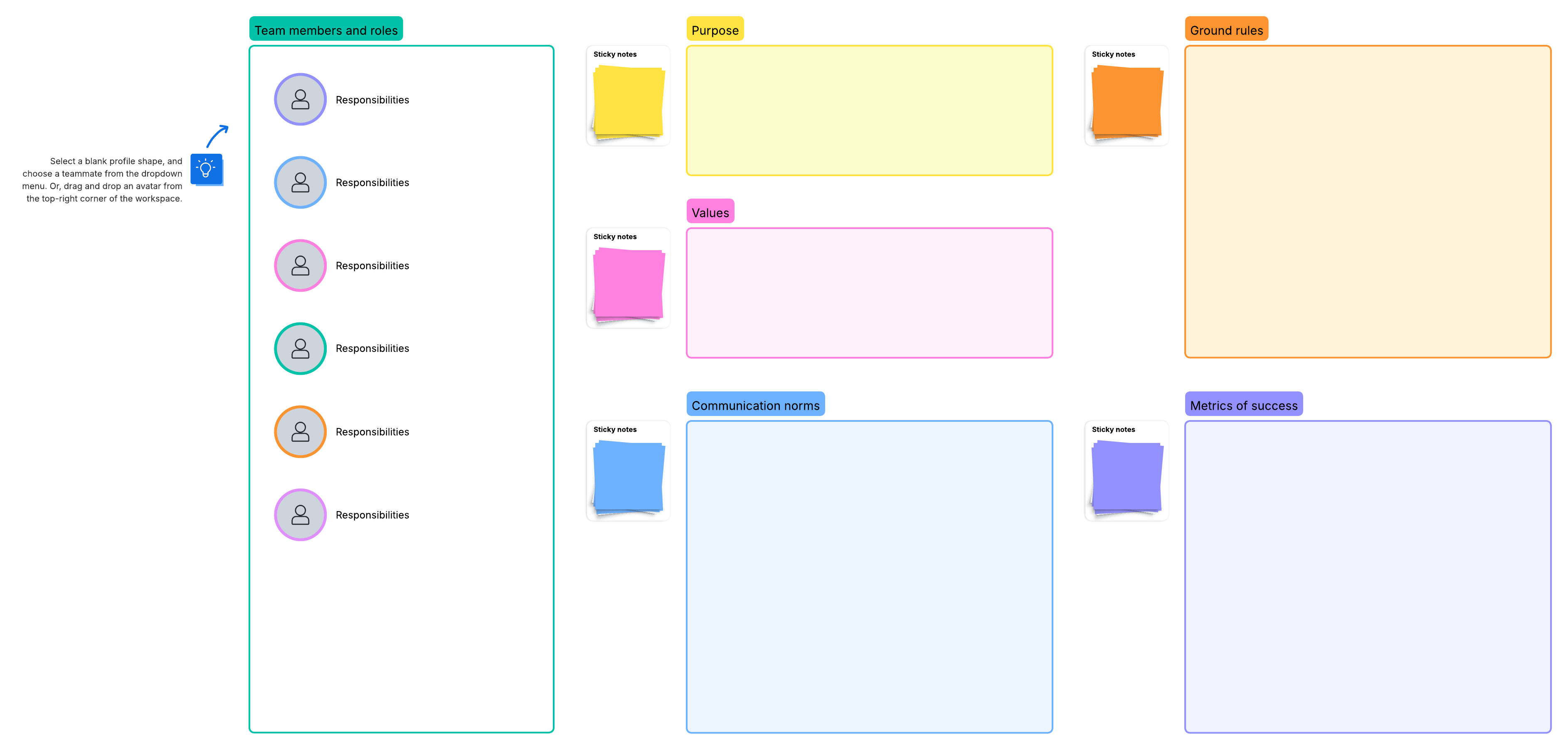
Leading by example doesn’t have to be spur-of-the-moment; it helps to establish cultural norms for your team, especially when it comes to conflict, and make clear expectations for commitment or accountability. Creating a team charter (also known as a team agreement) helps leaders determine norms and expectations with their team and provides people with official documentation to refer to when they need guidance.
Step #2: Create intentional connection
Leaders who cultivate psychological safety intentionally seek out and create connections among their team members. Whether it’s talking about favorite sports teams, expressing concern over stormy weather in someone’s local area, or inviting everyone to get to know each other over a quick icebreaker, each of these things helps to foster connection and understanding.
Leaders have a great opportunity to form connections with teammates during meetings, especially if your team is distributed or fully remote. Icebreakers humanize connection and support team cohesion. The trick is finding icebreakers that work for your team.
In Lucid, it’s easy to kick off meetings with a quick icebreaker thanks to an entire template library to choose from. You can ask your team whether they think a hot dog is a sandwich, what their preferred weather is, or facilitate more complex activities like a get-to-know-you session. Icebreakers can be quick and fun—and they help foster psychological safety.
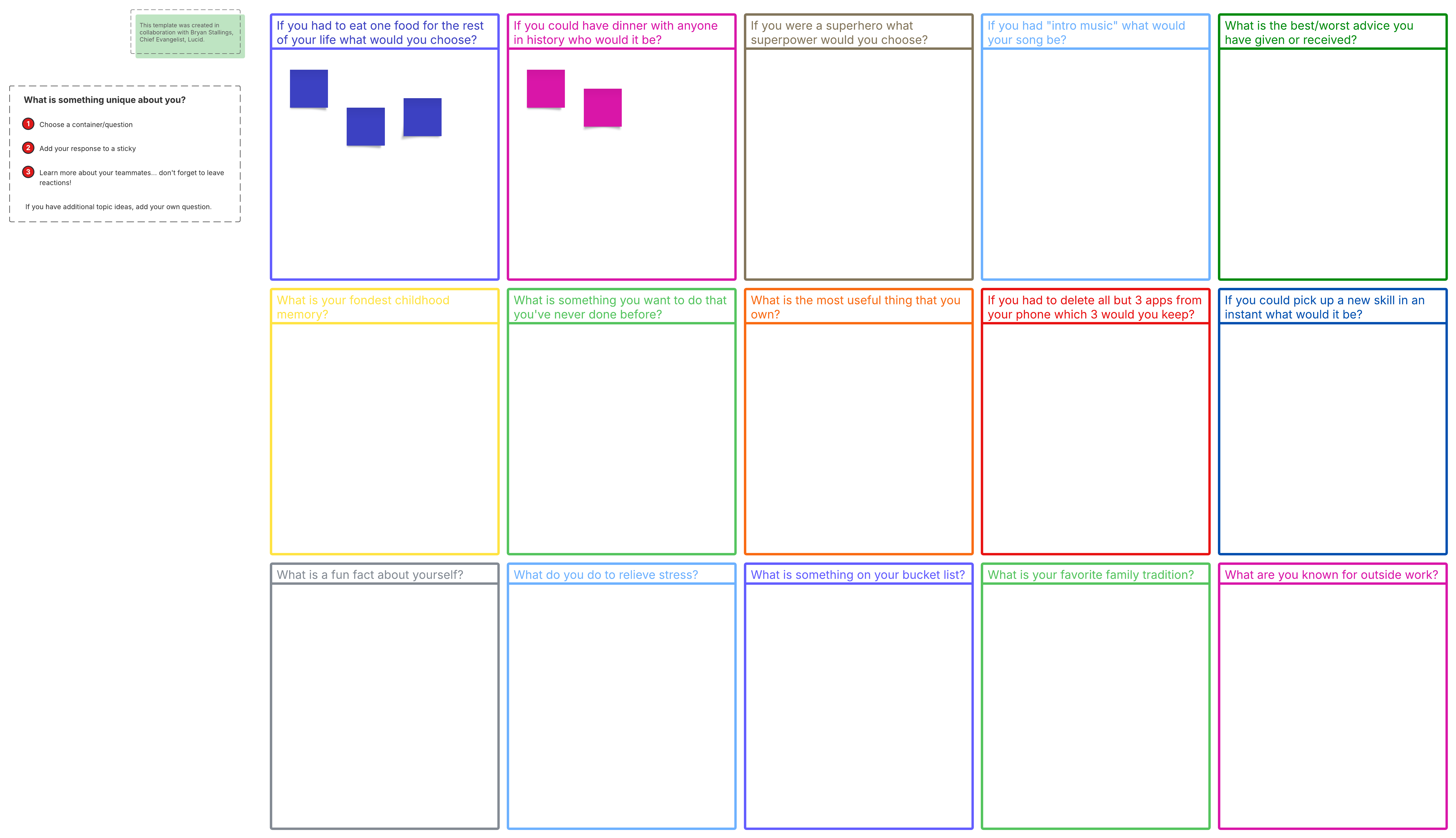
“To start a meeting regularly with an icebreaker isn’t a waste of time,” Nikolai explains. “You’ll see that it pays dividends in team cohesion. It provides an opportunity for people to be humanized and creates some extra connection, because now people know each other a little bit more.”
If you have a larger team, Lucid’s breakout boards feature is another great way to encourage intentional connection. This feature breaks your team up into smaller groups for collaboration. Small group work not only helps people feel more comfortable speaking up and sharing, it also builds trust and boosts morale.
Step #3: Foster empathy
Fostering empathy is another essential strategy to psychological safety. Leaders should understand that empathy is about more than just sympathizing with their team members; it also involves active listening and emotional intelligence. Instead of asking a teammate how they’ll get something done, ask them how you can tackle it together or what you can do to help move things forward.
“There’s a difference between empathy and sympathy. Say that someone’s stuck down in a deep, dark hole by themselves with no way out. Sympathy is looking into that hole and saying, ‘Well, it could be worse for you. At least it’s not raining.’ Empathy is climbing down into the hole and saying, ‘I’m here with you. Let’s get out and make it better together.’”
—Kelly Nikolai, associate solutions consultant, Lucid
Expressing support for others, being attentive to changes in mood, and understanding extenuating circumstances are all key ways that leaders can foster empathy—and by doing so, they provide an example that the whole team can follow.

How to improve your emotional intelligence
Learn all about emotional intelligence and how you can improve it in this blog post.
Read moreStep #4: Embrace feedback
To ensure psychological safety, leaders should foster a work environment that values and practices open feedback. Leaders need to welcome the tough conversations, practice active listening, and show that they actually take feedback into account as they change behaviors or actions accordingly.
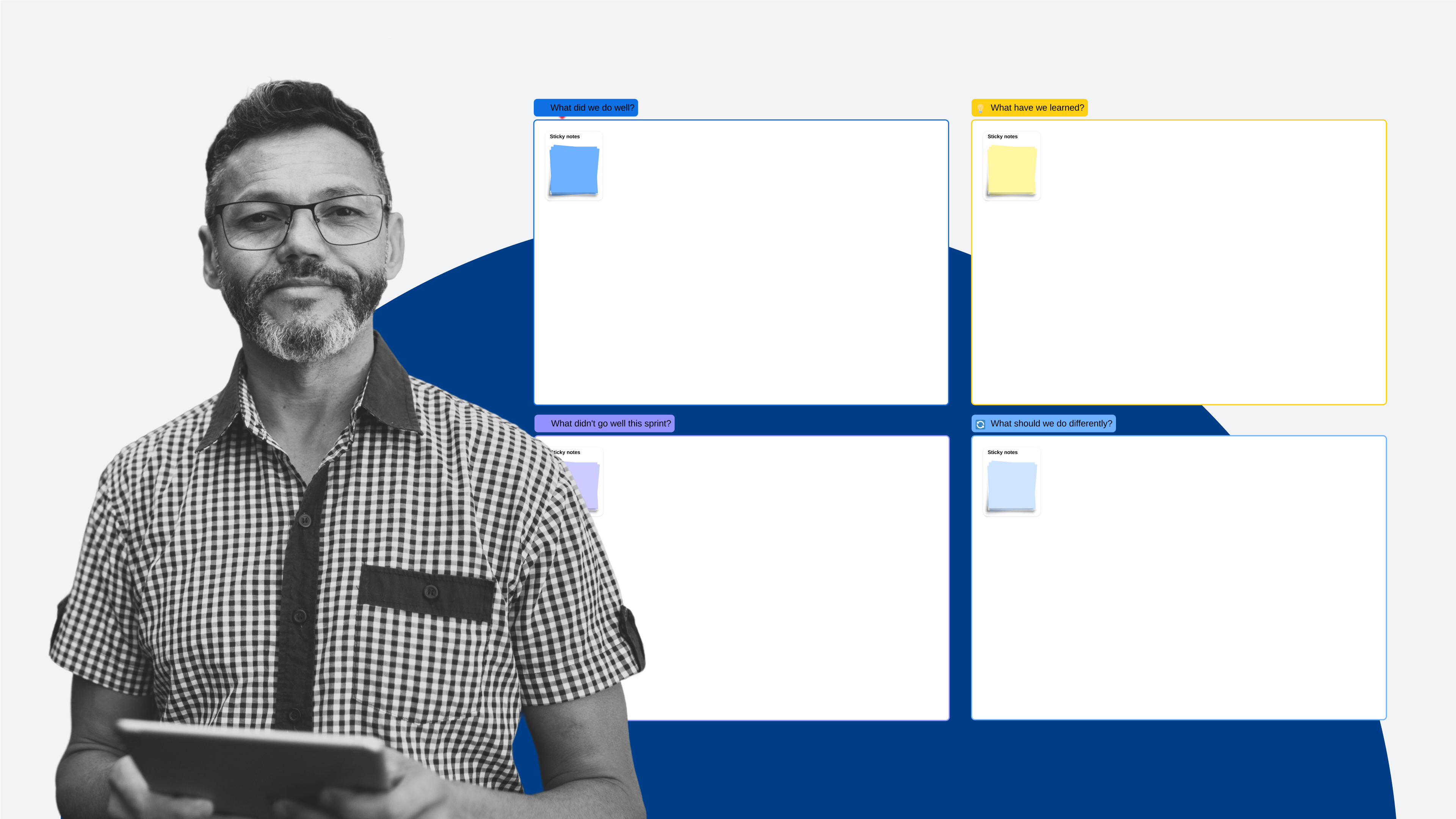
Retrospectives are an especially helpful tool for welcoming your team’s feedback in a psychologically safe way. Retrospectives provide an equal opportunity for each participant to reflect on what went well and what could have gone better. While retrospectives are typically used to reflect on a cross-functional project, they can be used for many different situations. You can host a retrospective to facilitate open, honest dialogue that helps address issues, uncover insights, and identify actionable improvements.
A retrospective template is a great way to get started on having a safe and honest conversation with your team. Common ones to try are:
-
A sailboat retrospective to visualize what helped push the team forward and what held people back
-
A quick retrospective that helps you review what went well, what went poorly, and ideas for next time
-
A start, stop, continue retrospective to organize the team’s thoughts and improve your creation process
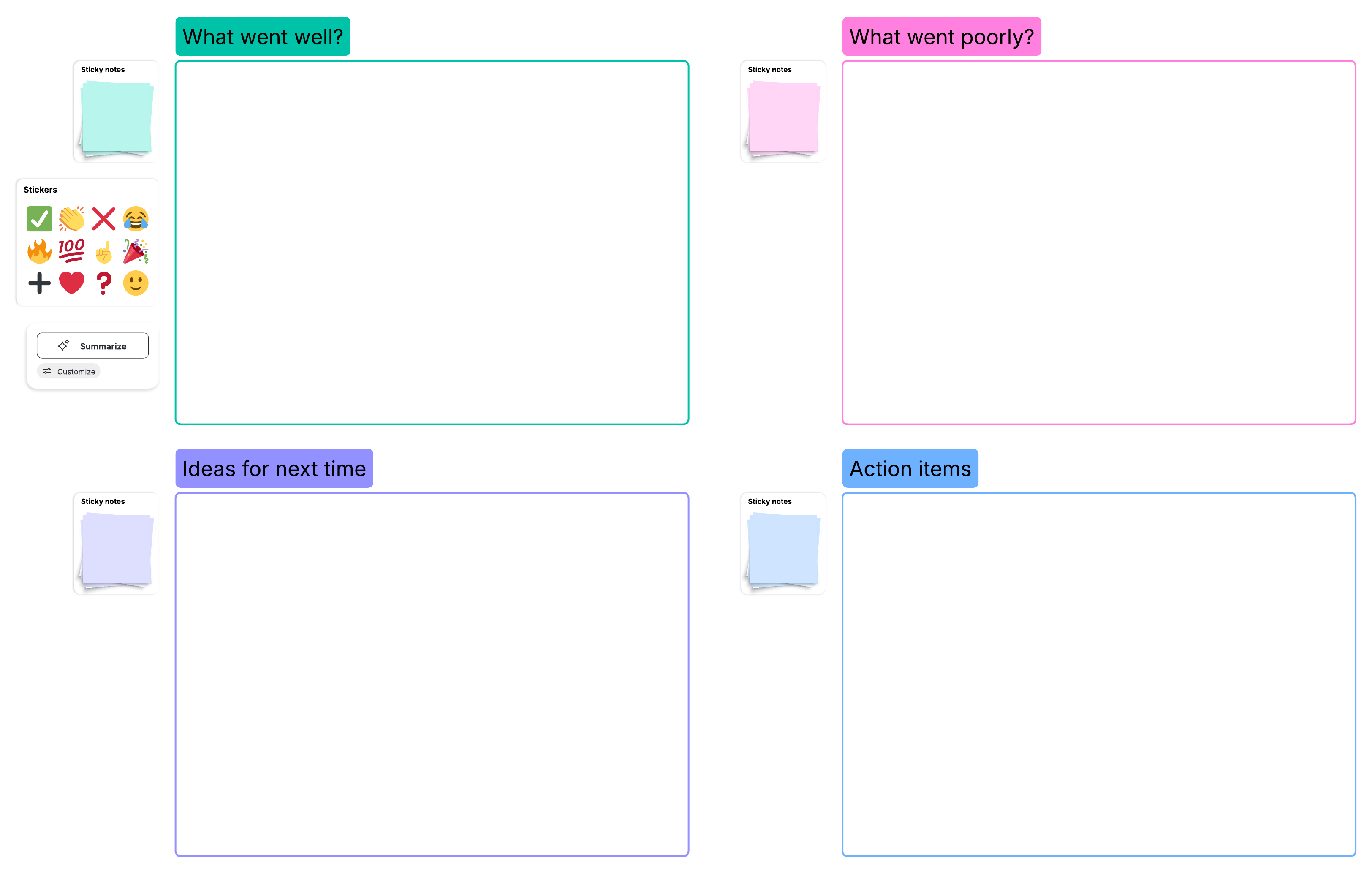
You can foster psychological safety even more in Lucid thanks to the private mode feature. In private mode, people’s names are hidden from sticky notes so they can leave honest feedback without feeling vulnerable or worried about bias. Even after private mode has ended on a Lucid board, the names stay hidden. Try using a retrospective in Lucid and turning private mode on to help your team feel fully comfortable with providing feedback.
Step #5: Encourage healthy, respectful conflict
The last step to fostering psychological safety can be the hardest: encouraging healthy, respectful conflict among team members. Contributory dissent—intentional discussions that help teammates express their differences—not only is key to psychological safety, it also helps build meaningful relationships. By allowing team members space to disagree in a respectful and productive way, you can celebrate the process just as much as the results and uncover better business outcomes.
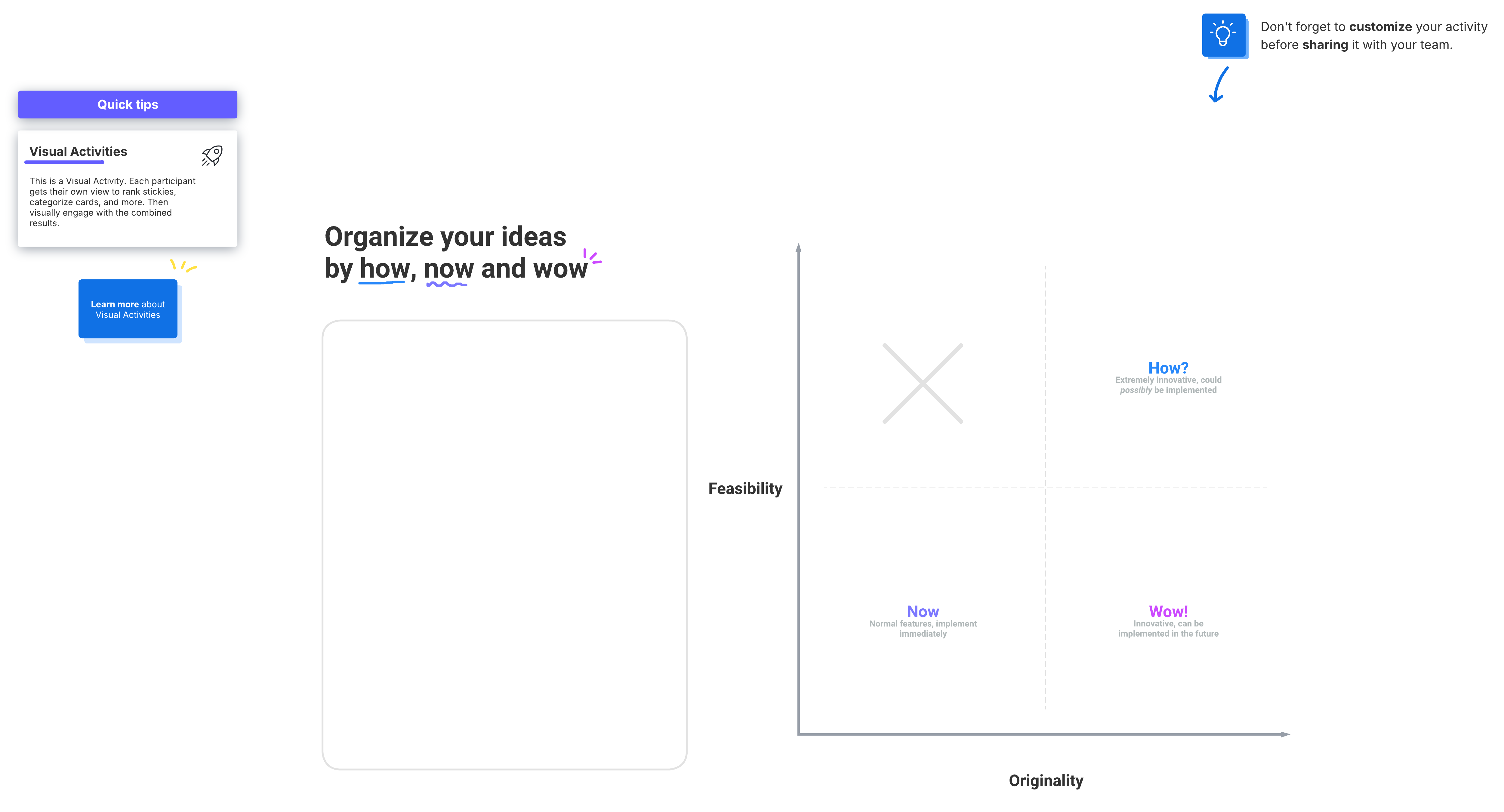
You can use a few of the things we’ve already discussed to facilitate healthy conflict, such as retrospectives and team charters where people agree to respect everyone else’s opinions. In Lucid, you can take it a step further by using Visual Activities.
With a visual activity, you can provide everyone an equal opportunity to voice their opinion and easily visualize areas of disagreement. Leaders have a structured way to approach disagreement and are able to foster psychological safety at the same time. If you need to understand where your team agrees and where they don’t, try using a visual activity to gather information and aggregate results so you can further explore conflict.
Build psychological safety for your high-performing team
Psychological safety is key for successful, engaged teams, and it starts at the top. Leaders can foster psychological safety at work by creating intentional connection, being empathetic, cultivating healthy conflict, and leading by example. It isn’t always easy, but ensuring that everyone feels like they can bring their authentic selves to work is worth it.
Check out more resources on building psychological safety and get information on how to become a high-performing team with further tips from Lucid.

How to build a high-performing team
Learn everything you need to know about creating a modern-day high-performing team in our comprehensive guide.
Get the guide