Facilitating a meeting is like conducting an orchestra. You need to be able to hear every instrument’s unique voice, have strong orchestration skills, and create harmony. But all too often, meeting facilitators end up with something more like chaos than harmony—with some voices drowning others out and valuable perspectives left unheard.
This issue is due to a lack of meeting equity. Without meeting equity, we run the risk of stifling innovation and employee engagement (not to mention effective collaboration).
So, how can facilitators create a cohesive composition and lead empowering meetings? In this guide, we’ll delve into the concept of meeting equity, explore common barriers to achieving it, and provide actionable strategies for facilitating equitable meetings that inspire creativity and drive results.
Understanding meeting equity
Meeting equity means that every participant has the opportunity to participate and engage in a meeting. It involves fostering an environment where every individual has a similar opportunity to express their ideas and ask questions, feeling confident and capable in doing so, regardless of their background or position.
Without a facilitator who prioritizes meeting equity, they might feel that their voice isn’t represented, that collaboration is cumbersome, or that another blocker prevents engagement.
Many individuals who wind up facilitating never receive training on leading effective meetings and may be unaware of the importance of meeting equity. So, we’re here to help shine a light on this critical concept. Let’s dive into the nuances of equitable meetings.
Equity vs. equality
Ensuring all participants have an equitable experience isn’t quite the same as giving them an equal experience. Equity in meetings emphasizes fairness and inclusivity. It means ensuring all participants have access to the resources and opportunities needed to contribute (regardless of their backgrounds or circumstances).
Equality, on the other hand, treats all participants the same. Approaching meetings in this way might not address the diverse needs and challenges that may arise during a collaboration.
Recognizing barriers to meeting equity
Some common barriers to facilitating equitable meetings include:
- Power dynamics: Hierarchical organizational structures can influence who speaks up and whose ideas are prioritized, leading to unequal participation. This is especially true when decisions default to the highest paid person’s opinion (i.e., the HiPPO in the room).
- Collaboration styles: Differences in collaboration preferences and cultural norms can create barriers to effective collaboration and understanding among team members.
- Cognitive bias: Unconscious biases may shape how facilitators perceive and interact with participants, inadvertently marginalizing certain voices while amplifying others.
- Working location: On dispersed teams, hybrid or remote workers may not have access to the same tools, information, or context as in-person team members.
Benefits of prioritizing meeting equity
If facilitators can overcome the challenges, these are just a few of the benefits they’ll see from prioritizing meeting equity:
- Better collaboration: Meeting equity fosters greater collaboration and synergy among team members by creating an inclusive environment where all are valued, both during and after the meeting.
- Improved decision-making: Diverse perspectives and experiences contribute to more robust discussions and better-informed decisions, ultimately driving organizational success and innovation.
- More engagement and satisfaction: When participants feel heard and respected, they are more likely to actively engage in meetings and express satisfaction with the process and outcomes.
Before the meeting: 3 preparation tips
Just like conducting an orchestra requires dedicated practice, achieving meeting equity requires deliberate prep work. Rather than a time-consuming task, think of it as laying the groundwork for a stunning symphony.
We’ve identified three tips to help any facilitator prepare for an equitable meeting.
Tip #1: Set clear objectives and agendas
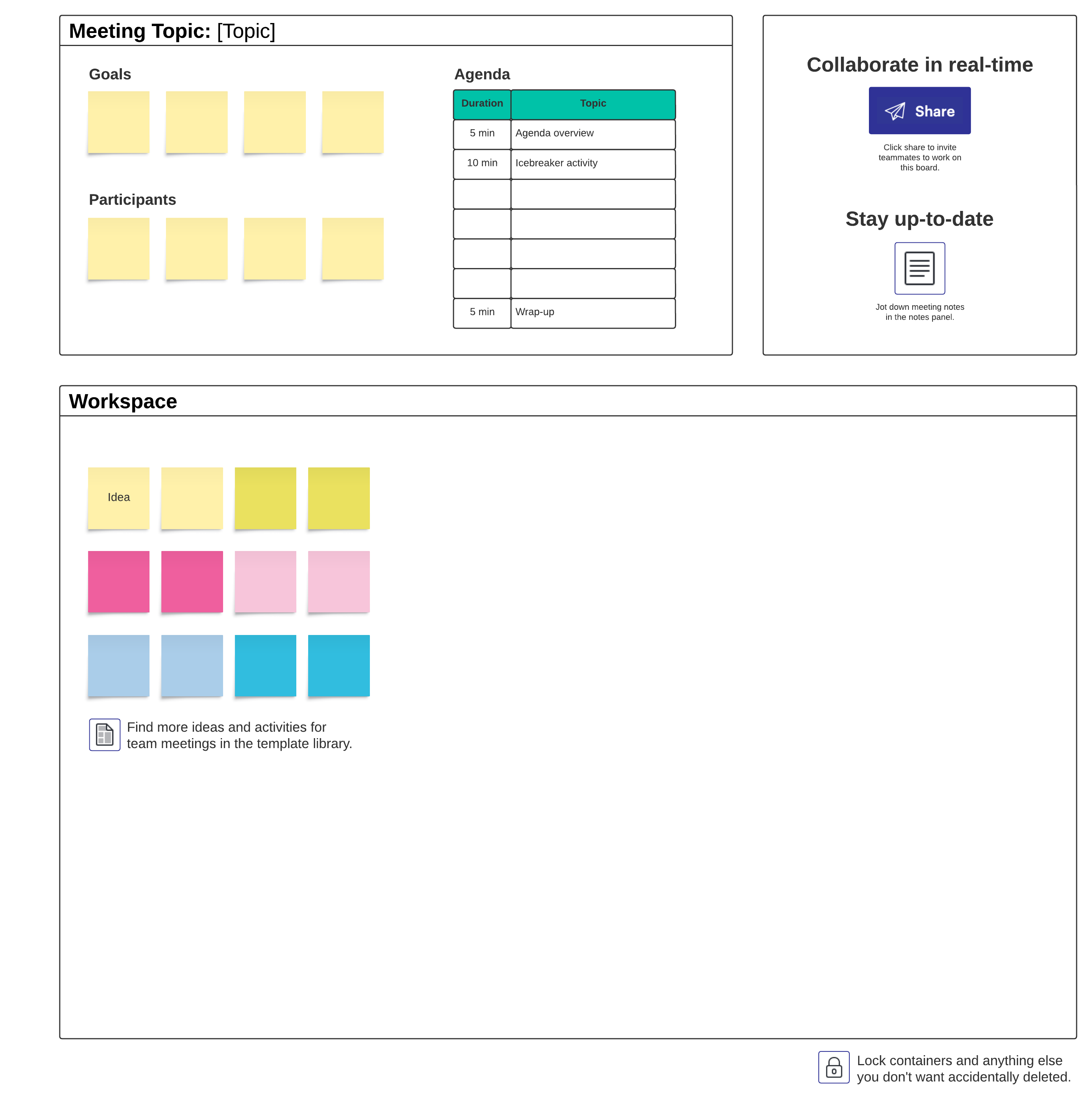
To get started, define the purpose and goals of the meeting. Having a clear outline of what you want to accomplish and which topics you’ll cover helps guide and focus the conversation. To make this experience as equitable as possible, make sure to share your agenda with participants ahead of time.
This is an especially useful tip for introspective collaborators who may only feel comfortable engaging with the content if they’ve had some time to collect their thoughts first. If you’ll be leading a brainstorming session, consider adding a section to your agenda for participants to share ideas ahead of time. Again, this will help those quieter individuals feel more comfortable contributing.
Tip #2: Establish team agreements
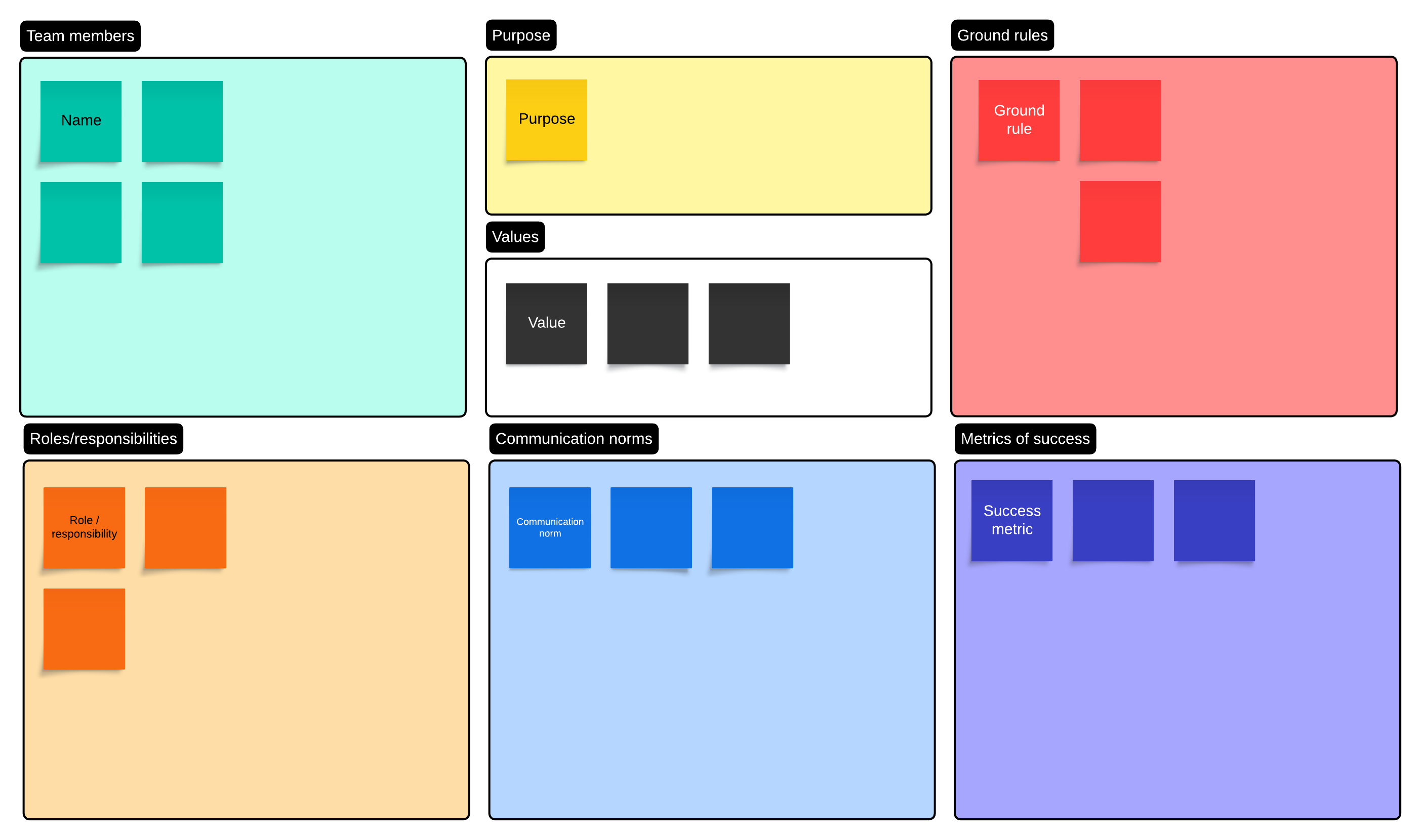
Before diving into your content, it can be helpful to establish some agreements. Getting those agreements documented in the preparation stage makes it easy to run through them at the start of your meeting.
You might consider including agreements for respectful communication, equitable speaking opportunities, and strategies for interruptions. Setting these clear expectations creates a safe and supportive environment. The goal is to make participants feel comfortable sharing their ideas and opinions.
Tip #3: Provide equal access to technology
Lastly, all participants must be able to access the technology needed for the meeting. Whether it’s video conferencing software, collaboration platforms, or document-sharing tools, every individual should have the same ability to participate in the conversation.
“Ask yourself: Am I providing the same tools to everyone so everyone can collaborate in the same way?”
–Jessica Guistolise, evangelist, Lucid
It’s easy to forget hybrid or remote team members in this process! We’ve covered a few strategies for promoting collaboration equity for all teams, including distributed ones. One of the most important is prioritizing digital-first collaboration, opens in a new tab.
Prioritizing digital-first collaboration makes it easier for all team members to participate and reference documentation later on.
Think about using a physical whiteboard for a hybrid meeting—remote attendees won’t be able to add their thoughts to it, nor will they be able to clearly see what’s being written on it. They definitely won’t be able to reference it later.
Using a virtual whiteboard, on the other hand, solves this problem. Team members will all be able to contribute equally and have the same access to the organic documentation created during the meeting by everyone adding notes or context to the board.
This is also a great example of collaborative note-taking. When team members can all collaborate and take notes in a shared space, it creates a valuable resource for everyone.

How to promote collaboration equity in your organization
Want to learn more about collaboration equity and get actionable strategies from the experts?
Read the guideDuring the meeting: 4 facilitation strategies
As long as you’ve prepped well, you should feel calm and collected before starting your meeting. You’re ready to create harmony!
Now, it’s time to put some facilitation strategies into action.
Before we dive in, there’s one game-changing mindset shift that applies to all of these strategies: Reframe meetings as experiences.
“For remote employees, those meetings might be the only time for them to experience any type of “macro culture” that your team, department or company is trying to create. So it’s not just a meeting—it’s an experience.”
—Ellen Thompson, director of learning, development, and inclusion, Lucid
While this is especially relevant for hybrid teams, it’s a powerful mindset that can change the intention behind every meeting.
Without further ado, let’s jump into four strategies you can lean on during your meeting to make it as inclusive as possible:
Strategy #1: Create a safe and respectful environment
As the facilitator, you’re in a unique position to set the tone as the meeting begins. Work to foster an environment of psychological safety, opens in a new tab from the start. This is a crucial step!
Consider the participants' familiarity with each other. Is this a team that works together daily, or have they never met before? This information should shape the way you set up the meeting.
From there, try starting out with some time for personal connections. It’s much easier to feel comfortable sharing input in the meeting when participants have had a chance to speak upfront. That might mean facilitating casual introductions, check-ins, or even a short icebreaker to help create connections in the team.
Hybrid teams may struggle with this because the in-person team members will often catch up and chat before they even start the virtual component of the meeting. When we do so, teams entirely exclude virtual team members.
“Organizations can fall into the trap of treating those outside their headquarters as less-than. When teams keep the mics muted until it’s time to get to business, it creates an inequitable and discouraging environment.”
–Bryan Stallings, chief evangelist, Lucid
Another thing that could help when facilitating hybrid meetings is ensuring you have the right focus on both audiences.
“I’ve personally found that in order to execute a stellar hybrid experience, you typically need at least one person responsible for each audience’s experience—one team member focused on the virtual participants, and the other on the people in person, plus a potential facilitator or presenter.”
—Ellen Thompson, director of learning, development, and inclusion, Lucid
Here are a few more actions you can take to set up an equitable environment at the start of your meeting:
- Start your hybrid meetings on time to ensure remote attendees don’t miss anything.
- Assign someone in person to watch the chat for remote attendees during hybrid meetings.
- Demonstrate (or even call out the importance of) active listening, empathy, and open-mindedness.
- Encourage participants to express their thoughts and opinions. Make it clear to them that not only do you welcome their input, but you’re enthusiastic about their participation.
- Address conflict quickly and sensitively to maintain the integrity of the meeting space.
Strategy #2: Balance participation
Power dynamics can disrupt and distract participants, regardless of the type of meeting. Those dynamics might include in-person vs. remote team members, those in varying levels of seniority, those with more extroverted collaboration styles, and more.
Remember these dynamics during the meeting, and ensure all participants can contribute equally to the discussion.
Pro tip: Pay attention to who is speaking often and who is staying silent. Encourage quieter team members to share their perspectives by explicitly inviting them to do so. Then, validate their input. Consider adding a “parking lot” to your meeting agenda or space. This will lessen tangents and ensure everyone has a voice.
Though it may take extra time, making space for everyone in attendance leads to better collaboration. It makes team members feel heard and valued. Plus, actively inviting diverse perspectives from your team members will make for a more productive and engaging meeting, opens in a new tab overall.
Strategy #3: Use inclusive tools and techniques
In an increasingly digital world, many teams rely on at least some technology to facilitate their meetings, especially if you’re working on a hybrid team! So, learn to leverage those tools to create a more inclusive and productive environment.
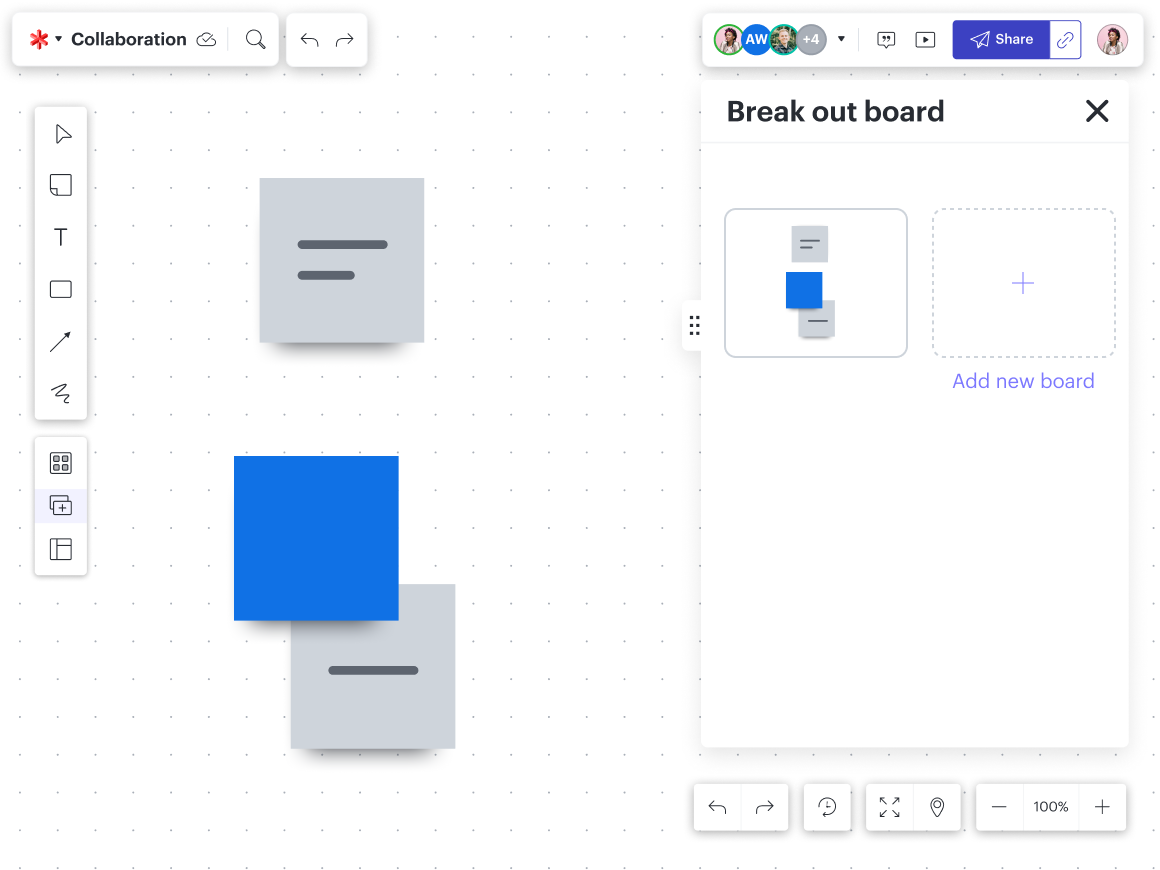
One tip you can implement is to break up a large group into smaller breakout groups before bringing everyone into discussion. Smaller groups can be less intimidating and give participants an environment of greater safety to discuss their ideas first. Giving individuals the opportunity to validate their inputs can increase their confidence, making them more likely to bring their thoughts to the larger group since they’ve already been validated.
You can do this in your virtual meeting software. And if you’re using Lucid, you can use the Breakout Boards, opens in a new tab capability to give these sub-teams their own ideation or note-taking space.
Adopting inclusive decision-making techniques is also crucial. Techniques such as fist to five allow everyone to have a say and open up space in the discussion.
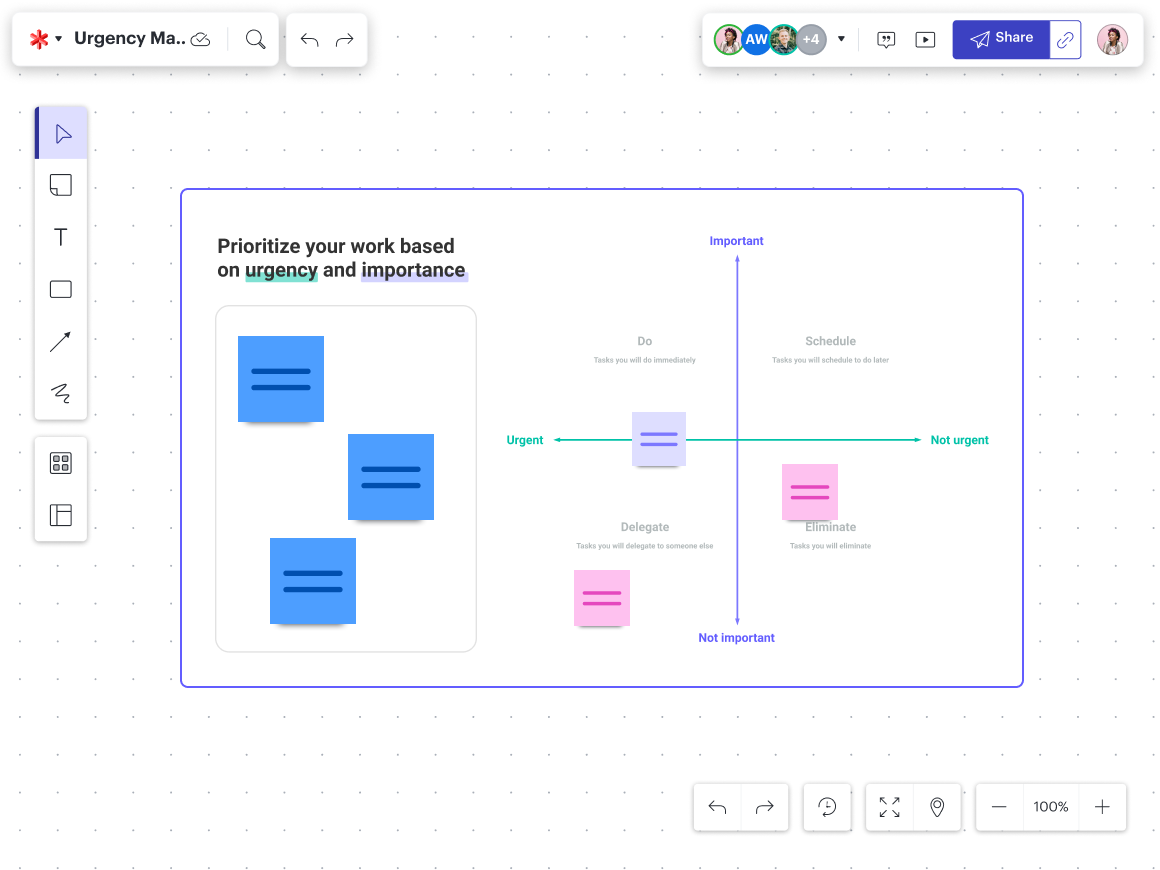
If you want to lower the barrier to entry further, Lucid’s Visual Activities is a great solution for creating inclusion. You can add these interactive polls right on the team canvas and make it easy for everyone to quickly add their thoughts to a brainstorming session, decision-making process, or prioritization conversation.
Strategy #4: Embrace conflict
Conflict is a natural—and healthy—part of any discussion. As a facilitator, the idea of conflict might seem intimidating, but it’s important to look at it as a learning opportunity for all parties involved (including you!). When conflict comes up and is resolved in an intentional way, it can strengthen bonds between team members and contribute to the overall success of the meeting.
Not every meeting is going to have the same requirements when it comes to conflict resolution and disagreements. While some teams work together daily, others work together in one-off meetings or cross-functional teams that don’t have a ton of frequent involvement. In these cases, focus on preparing for and embracing disagreement.
Especially on cross-functional teams, disagreements can be an opportunity to build mutual trust and foster psychological safety.
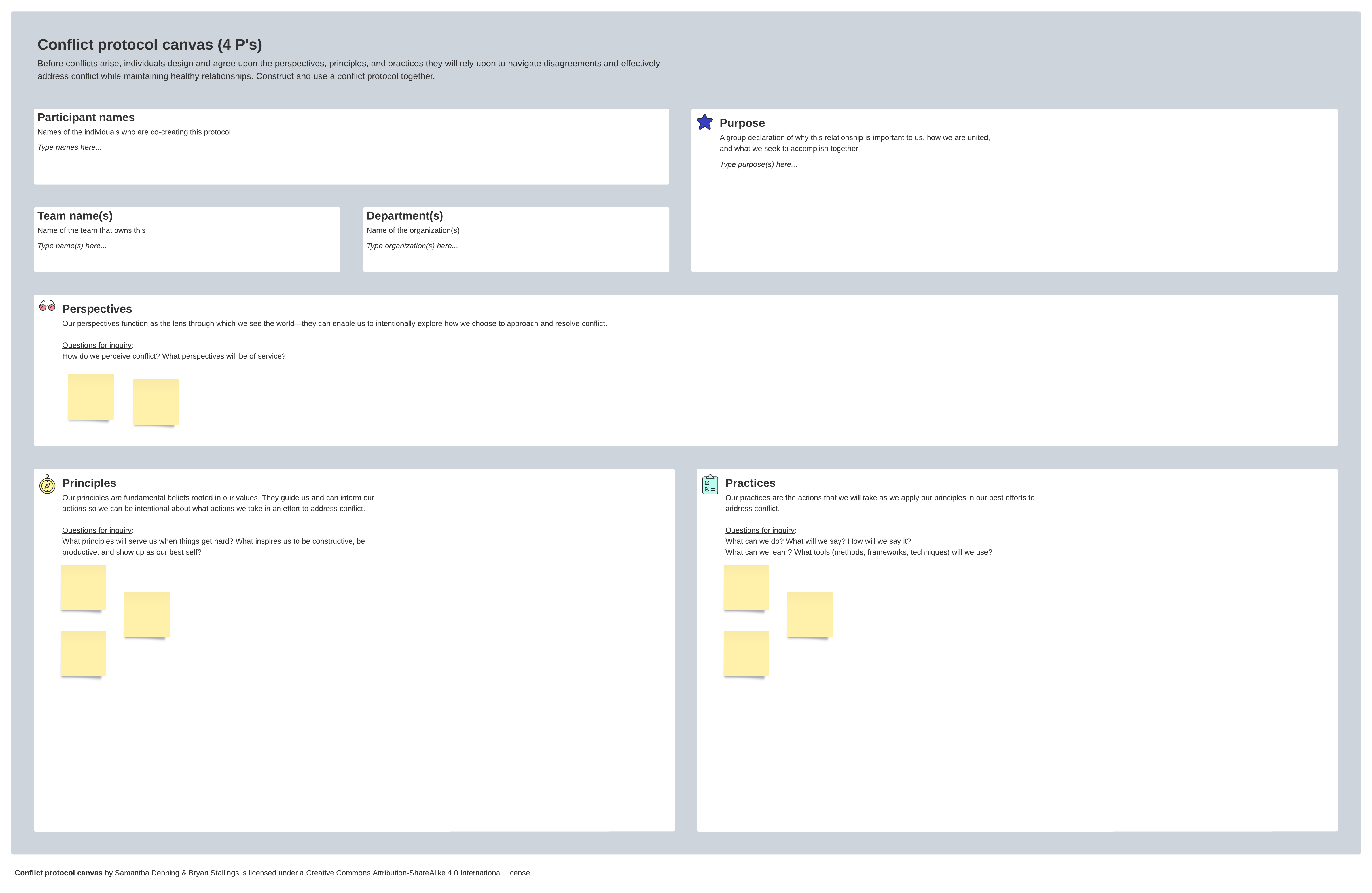
Teams that work together frequently benefit from creating a conflict protocol.
This is a fantastic exercise to do collaboratively with a team. That way, each individual can share their perspective on how conflict should be handled, and then you can decide on how it all fits into your protocol. Making this a collaborative experience means each team member will be invited into the process.
Pro tip: When a disagreement arises, the first step is to name it. “Well, there are clearly diverse points of view on this,” you may say. Next, we will determine together if it would be best to solve it in the current meeting or if it would be better to address it later. Sometimes, it’s not the right time or place to have certain conversations.
After the meeting: Feedback and documentation
The meeting might be adjourned, but the work isn’t over quite yet. Collecting feedback on the meeting is essential! Look at the process of getting input as an opportunity to reflect on how the meeting went and identify areas for improvement.
"As a facilitator, you create safety so people can provide feedback about how the collaboration is going along the way.”
–Bryan Stallings, chief evangelist, Lucid
Here are a few key questions to consider when asking the team for feedback:
- Did the meeting move the team closer to its goals?
- What decisions were made?
- What action items were assigned?
- Is everyone aligned on the takeaways?
- How was conflict addressed?
- Was everyone able to participate effectively?
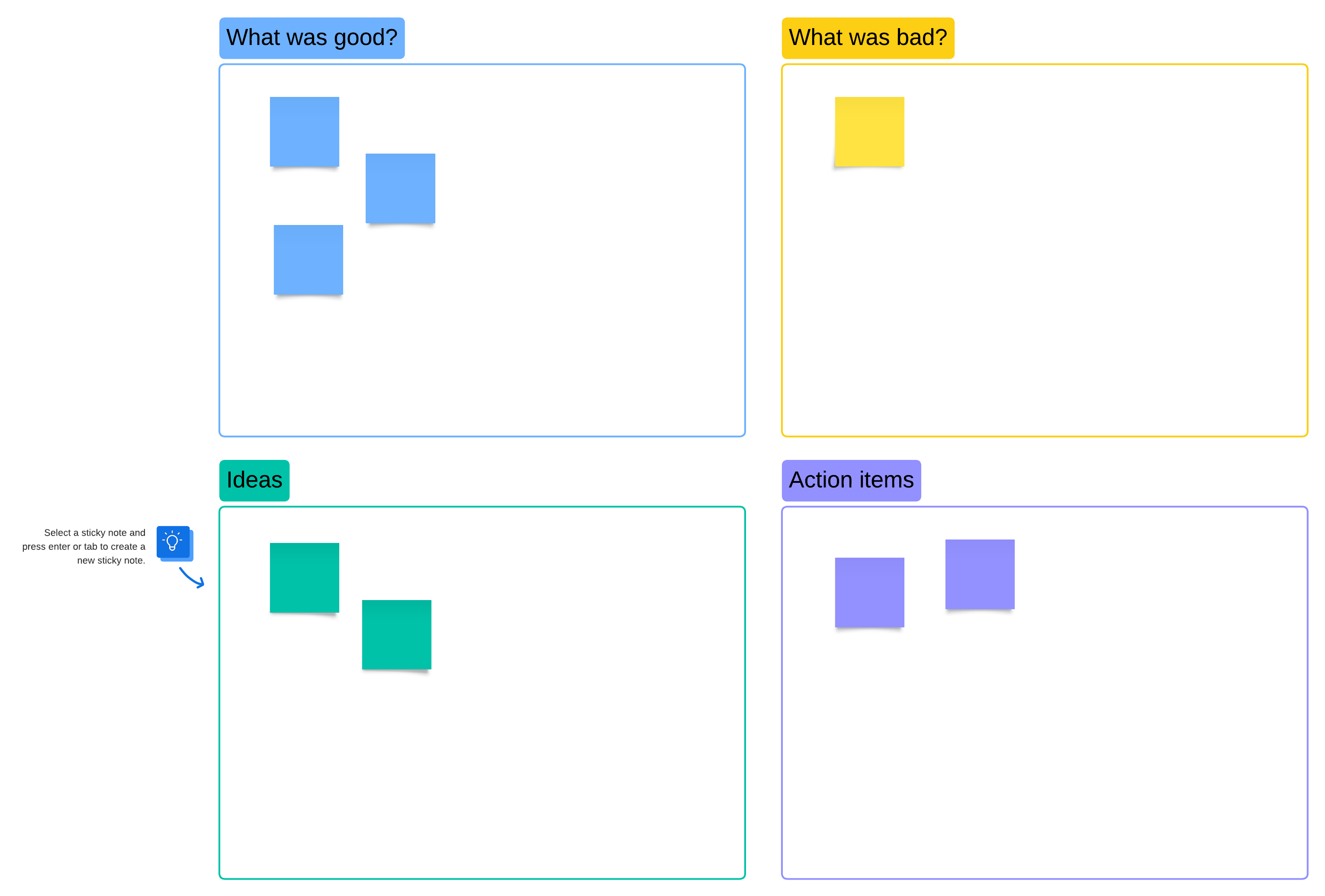
We touched on how effective Visual Activities can be for live meeting collaboration, but they work just as well asynchronously. You can create a Visual Activity and invite all of your participants to add their feedback when convenient. Then, you can aggregate that feedback with the click of a button and share the results.
Or, if you want a bit more structure, try out this Lucidspark template:
Ensuring everyone has access to information is central to an equitable experience. Access to documentation is important for every team member. Having a shared space where the team can return and reference notes, resources, context, and action items from team discussions is important to create an equitable experience.
So, in terms of actionable strategies, document those things in a shared space that is easily accessible to all participants.
Pro tip: Lucid’s Team Spaces is an ideal solution for this use case!
Lead equitable and efficient meetings with Lucid
Work moves fast in our modern society. As a result, team leaders are typically more concerned with holding an efficient meeting than an equitable one. While efficiency is crucial when facilitating, it’s important not to skip over the steps it takes to create an equitable environment.
Equitable meetings are efficient meetings. When everyone feels comfortable participating, you’ll receive better feedback, have more productive conversations, and build trust with your team.
Facilitators need capable software in their corner to help them create equitable environments most efficiently. That’s where Lucid comes in. Bring your whole team together on a shared virtual canvas to brainstorm, collaborate, ideate, decide, plan, diagram, and more.
Ready to get started?
With Lucid, you can host equitable, engaging, and effective meetings on the regular.
Ask us how