
Introduction
It has become common to hear companies say “we are data-driven” or “we deliver solutions backed by data.” On a resume, candidates often list that they “perform data analytics” in their role. That all sounds really great and professional, but what do these phrases actually mean? My name is Hawkin Saeger, and I am a Data Analyst at Lucid Software. Whenever I meet someone and they ask about my career, I tell them “I am a Data Analyst.” Almost every single time, their face glosses over, and they smile and nod with a blank stare as they pretend to know what that means.What is data analytics?
To put it simply, data analytics is the practice of using data to make better decisions. You probably did some form of data analytics today without even realizing it. For example, when you woke up you may have checked the weather, saw it was going to be cold, and decided to wear a coat. You took data (the temperature), and used it to make a better decision (wearing a coat so you wouldn’t be cold). There are many forms of data analytics such as data analysis, data science, data engineering, and analytics engineering. All of these specific forms of data analytics revolve around the central idea of collecting, cleaning, storing, and transforming data, then using it to uncover insights, create reports, and build predictions. Data analytics is not limited to any one industry, either, because data is everywhere!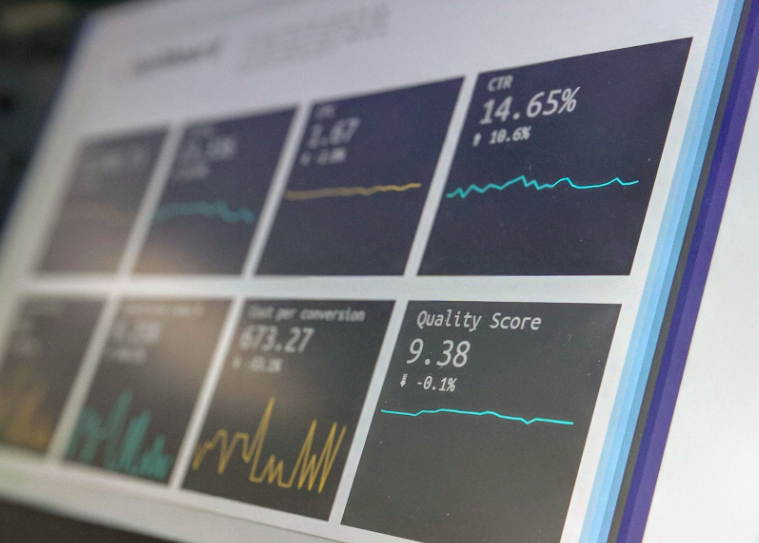 Data dashboard with multiple metrics changing over time.
Why is data analytics important?
So why are companies so focused on data analytics? Well, if members of an organization are making smarter decisions, the organization is more likely to be successful. Analyzing data can uncover key customer insights that help companies improve products, customize services, and change offerings. Ultimately, these decisions help companies achieve their respective goals.What does a data analytics problem look like
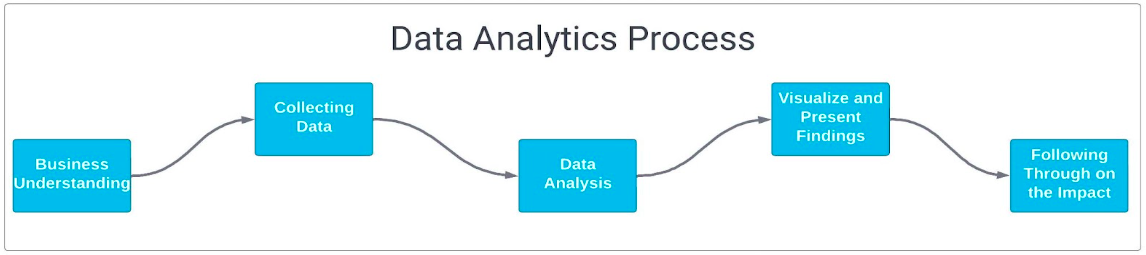 The Data Analytics Pipeline Overview
Business understanding:
First, it is crucial for the data analyst to thoroughly understand the business request. Without doing this in the beginning, the project will have a much lower chance of success. There are a few key pieces to understand about the business area. Asking questions like “How are decisions made?” and “What metrics does the organization care about most?” are good starting points. Once the analyst understands the problem from the perspective of the business area, they can move to identifying the details of the problem. The analyst should get all their clarifying questions answered, and lay out a plan for solving the problem. Here at Lucid Software, we are also adamant in understanding the impact of the request. If someone is just “curious about what the data says”, our team likely is not going to prioritize that request. We make sure we are moving a metric or influencing a decision. This ensures we are a valuable resource to the company overall by utilizing our time in the most effective manner. Let’s say the business area with the analytics problem is seeking to understand user behavior on a specific web page so they can make a better decision. The analyst should clarify why they want to understand the behavior. Is the business trying to drive more users to a certain button on the web page? Do they want the users to remain on the web page longer? Ultimately, the goal is understanding the impact the analysis would fulfill.Data collection:
If the necessary data isn’t already being collected, the data analyst will need to devise a plan to do so. First, determine what quantitative and qualitative data is necessary to answer the business’s questions. This could be done through tracking user events, collecting payment transactions, or surveying users. I won’t dive into the specifics of data pipes and getting data from various sources in this blog, but just know that eventually the data will need to be brought into a centralized location. In many companies this is their data warehouse, but it could also be a folder where an analyst can query from various data sources.Data analysis
After the data has been collected, it will need to be cleaned. This comes before any analysis because it is unlikely that the data will be ready to use right when it comes in. Cleaning is often the most time-consuming part of any analytics problem as well. Problems that analysts frequently encounter include:- Null values - empty cells and missing data
- White space - extra spaces after values
- Formatting strings - naming conventions, capitalization issues, and typos
- Manually-input strings prompt more problems
- Outliers - extreme values that skew results
- Duplicates
- Aggregating data to answer questions
- Building a predictive model
- Creating a dashboard to display metrics
- Building a slide deck supported by data
Visualize and present findings
 A data analyst prepares visualizations to present their findings