
The whole point of Scrum methodology is to help your team create software with an agile mindset—in a way that's flexible, collaborative, iterative, and results-driven. But your team will need support to be able to reap these results. Enter the Scrum ceremonies: the sprint, spring planning, daily scrum, sprint review, and sprint retrospective.
These five events are the structure that supports your team by setting expectations, encouraging collaboration, and aligning everyone's work. But if you just have these events for the sake of having them, your team won't benefit. The results depend on how well you perform them.
Sprint reviews and retrospectives are the two final ceremonies in a sprint, and they can be difficult to do well. Keep reading to learn more about what they are, how they're different from each other, and how Lucidspark's templates can help you make the most of these important Scrum events.
What is a sprint review?
The sprint review is one of the five Scrum ceremonies. The team holds it at the end of a sprint. The development team, product owner, and stakeholders on the business side of the organization attend.
During the sprint review, the development team reviews the work that they completed during the sprint, including giving demonstrations of completed work on the product. From there, the business stakeholders can ask questions, give feedback, and offer insights that the dev team may find helpful.
During this discussion portion of the meeting, the dev team and the business stakeholders align. The dev team needs to update the stakeholders on what was and wasn't done this sprint, and the stakeholders help the dev team understand what's going on with customers and what they need. In the end, this helps the business stakeholders understand the status of the product and the dev team understand how they can help the company's clients.
At the end of the meeting, the product owner updates the product backlog to show what's completed, in progress, and the next highest priority. This sets up the dev team for the next sprint.
If you're leading a sprint review, check out our tips for making the sprint review successful article, where we give best practices for preparing for and facilitating the meeting.
What is a sprint retrospective?
A sprint retrospective is another Scrum ceremony that occurs at the end of a sprint. However, this meeting is held after the sprint review. The dev team and the product owner attend.
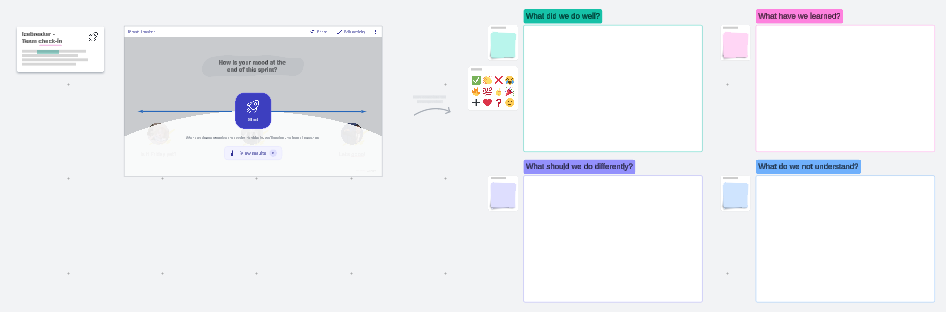
During a sprint retrospective, the team reviews how the sprint went for them. Generally, they try to answer three questions:
-
What went well?
-
What didn't go well?
-
How can we improve the way we do our work in the next sprint?
As the team answers these questions, they celebrate their wins, discuss the challenges they faced, and brainstorm ways around those roadblocks if they come up again in the future. At the end of the meeting, the team compiles a list of action items based on the discussion. If they complete them, then the team should be ready to do their work more efficiently in the next sprint.
Sprint retrospectives can be tricky to do well. If the facilitator doesn't keep the meeting positive, focused, and productive, it can devolve into blaming others for whatever went wrong or demoralizing the team. To keep the meeting action-oriented, check out our blog post on how to run an effective sprint retrospective.
What are the differences between sprint reviews and sprint retrospectives?
While sprint reviews and retrospectives both go over what happened during the last sprint, they have different purposes. A sprint review's goal is to align the dev team and the business stakeholders on what has been accomplished and what customers need to happen next. It is strictly focused on the work itself.
On the other hand, the retrospective relates to the way the team does its work. Its purpose is to improve the dev team's performance so that they can accomplish more in the next sprint.
Because the two Scrum ceremonies have different purposes, they have different participants and outputs. Business stakeholders attend sprint reviews, but they do not attend retrospectives. And while a sprint review should end with an updated product backlog, a sprint retrospective should produce a list of action items to improve efficiency.
How Lucidspark templates can help you
If you're facilitating a sprint review or retrospective, Lucidspark can help you make the meetings focused and productive. Use one of our templates to guide the meeting, and use Lucid’s powerful tools for facilitators like voting, commenting, and converting sticky notes to action items to keep everyone on track.
Sprint review templates
If you're facilitating a sprint review, one of our templates can help you plan and guide the meeting, keep everyone participating focused and involved, and create documentation for what you discussed. Try one of the following sprint review templates:
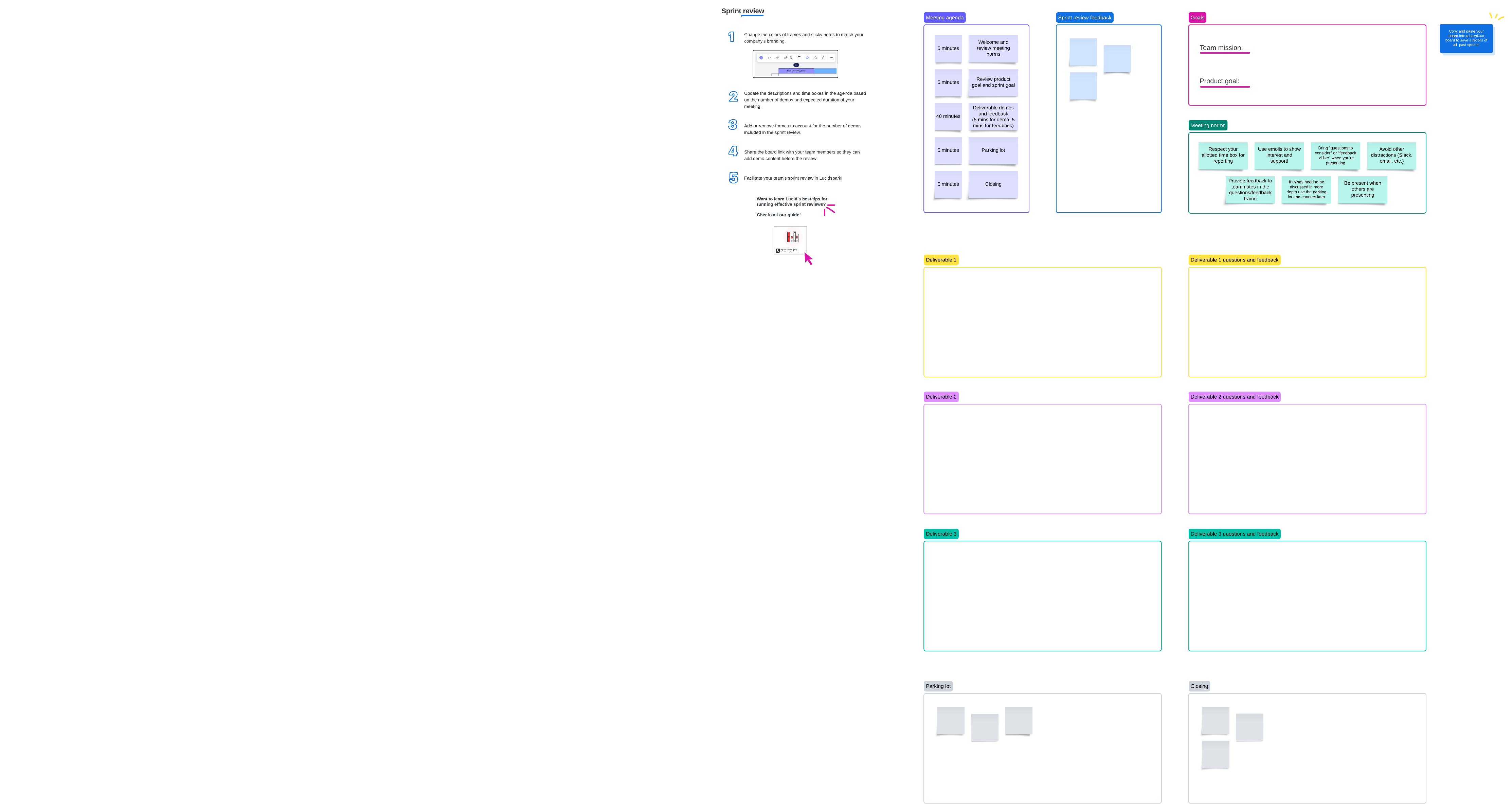
If you're looking for a template that is ready to use right away, the quick sprint review template has you covered. Add your team's meeting norms, the agenda, and your goals for the review, and you're ready to go. Take notes in the template as your team discusses and demos so that you have documentation when the meeting is over.
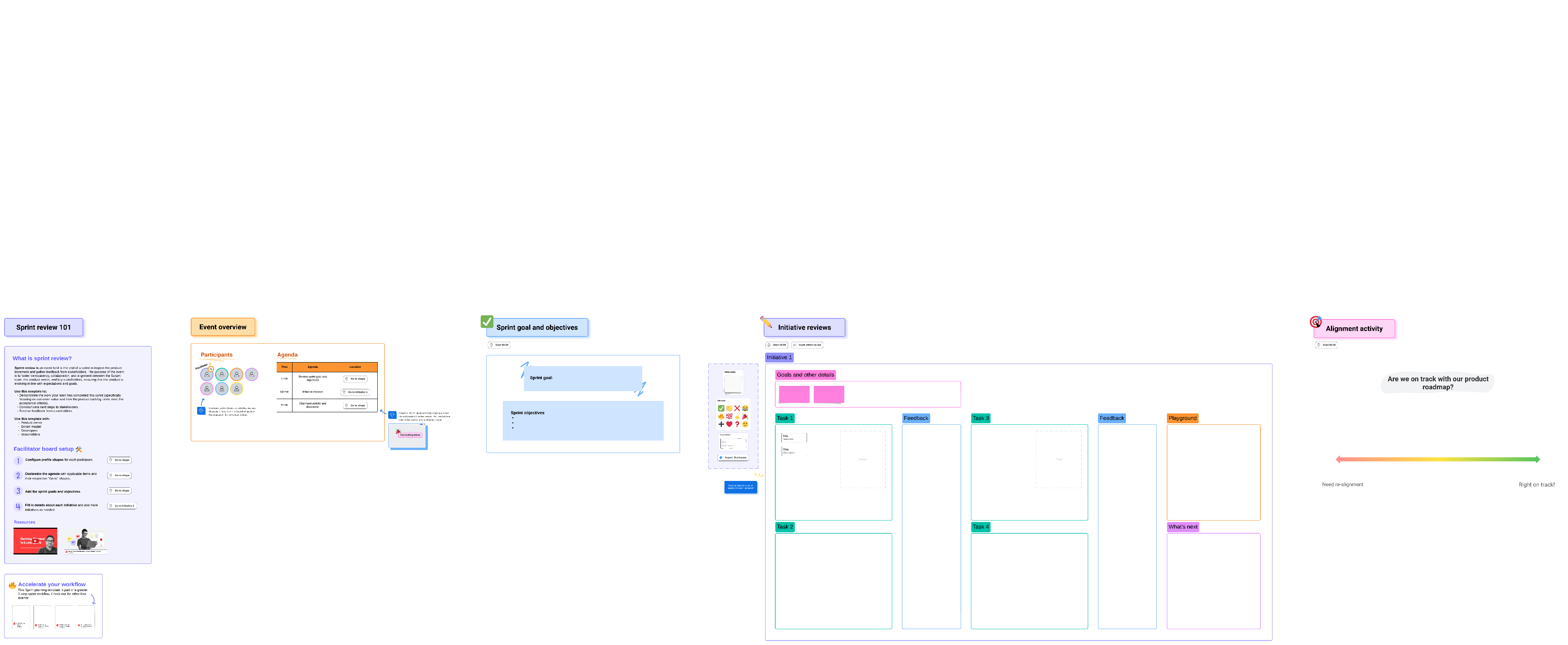
The sprint review template is an all-purpose template that requires little upfront work. This one has more room for customization. While you'll need to put in a bit more prep work to get it ready for your meeting, you can get it exactly as you want it. Plus, it has a built-in icebreaker activity to get everyone comfortable.
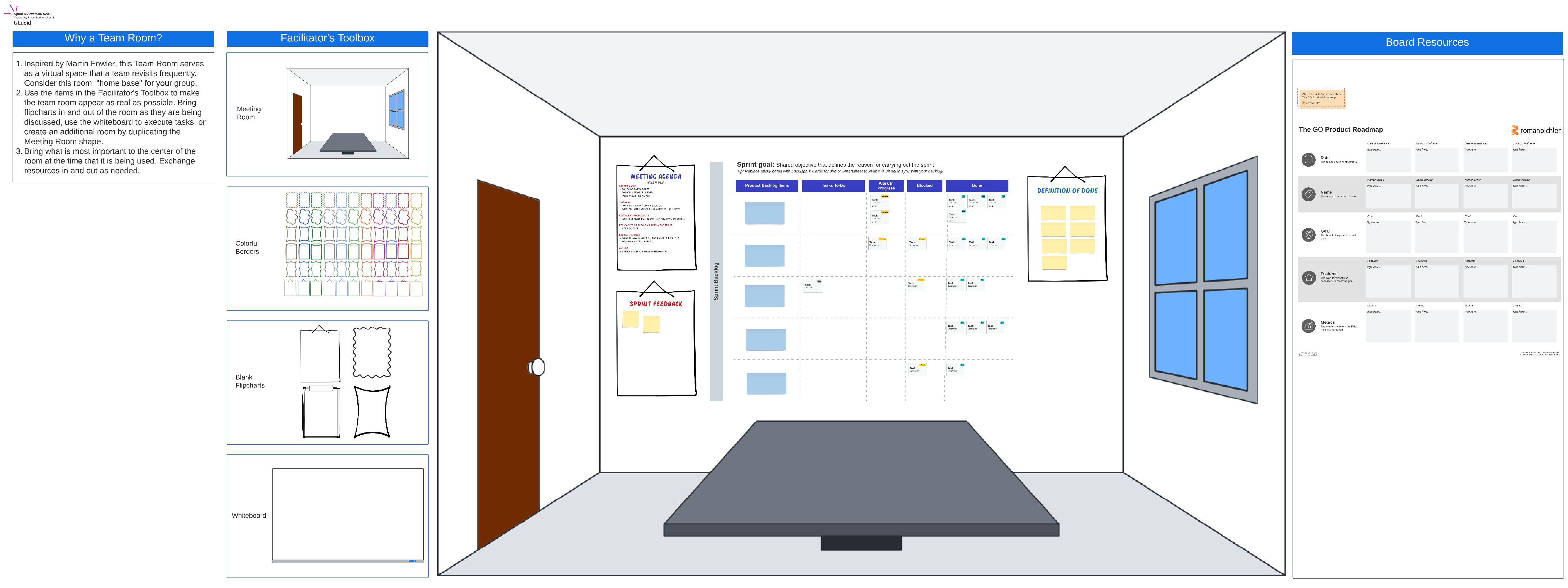
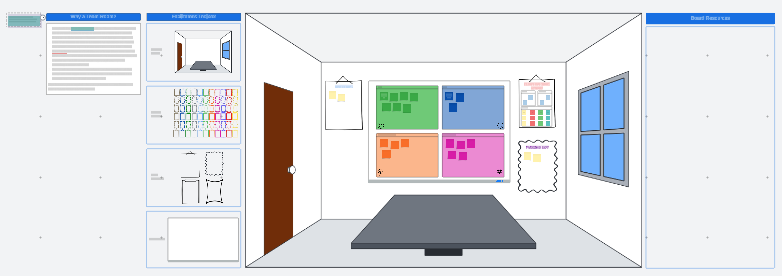
If you have a hybrid or remote team, participants may not feel as connected in meetings. So make your virtual meeting feel more like an in-person one with our team room template. Use it for every sprint review meeting to give everyone a familiar space to meet in, and people will feel more comfortable opening up and participating freely.
Sprint retrospective templates
Proper preparation and facilitation can help you make your sprint retrospective a positive, encouraging experience that leaves your team energized to tackle the next sprint. Use one of these templates to help you do just that:
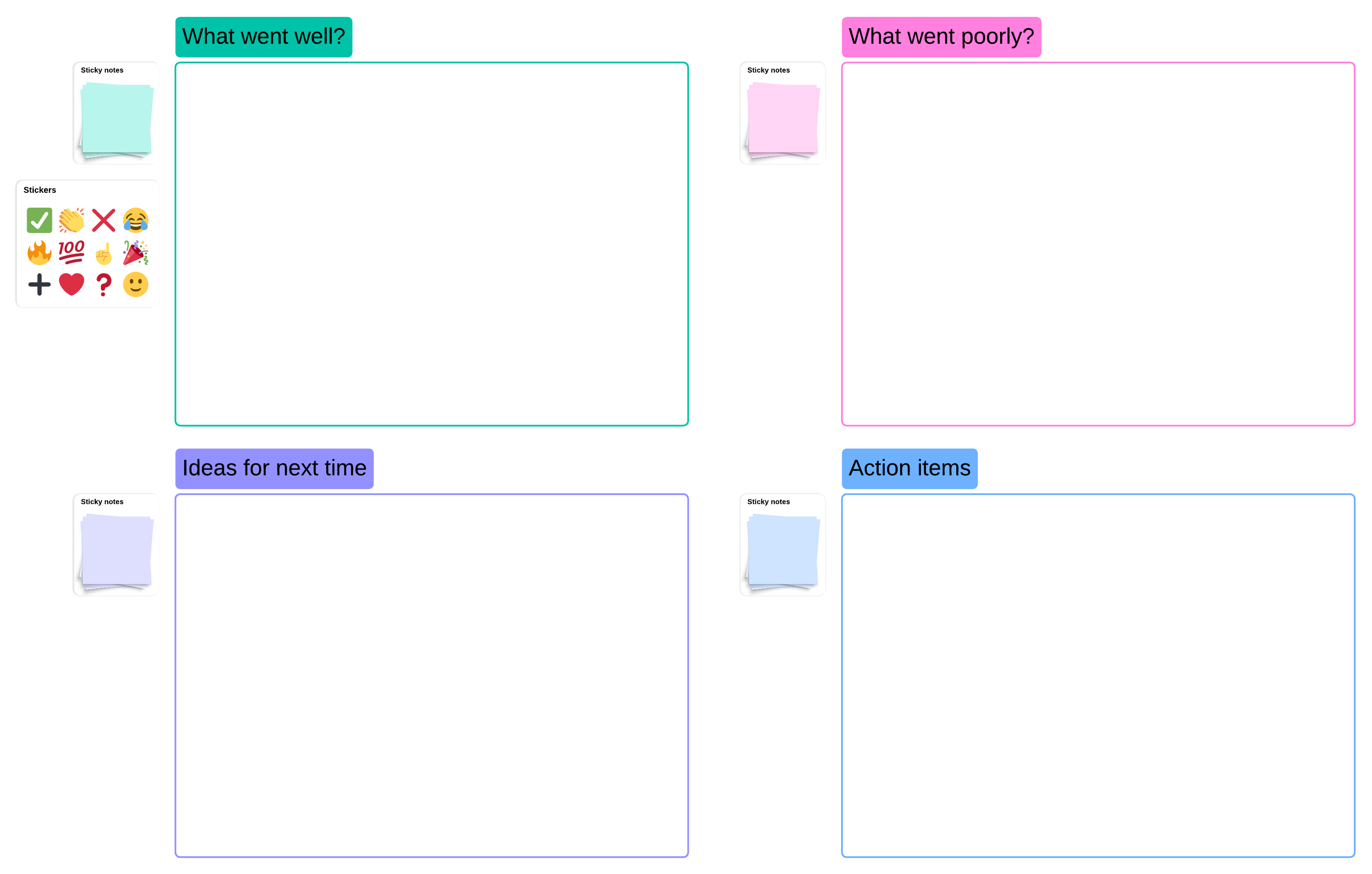
The quick retrospective template is our all-purpose retro resource. It's ready for your team to fill out during your meeting right now with no prep work.
The retrospective template offers a more in-depth experience for your team, including a built-in icebreaker and more detailed discussion questions.
Just as a virtual team room can help your team feel at home during a sprint review, you can use this team room template for a retrospective. This is especially important while discussing the team's mistakes and times they fell short. If you can't meet in person, you can still create a virtual safe space for everyone to speak freely.
No matter what template you choose, your whole team can participate and add their contributions to the document, ensuring that you capture all the ideas for your documentation. That way, everyone ends the meeting aligned and ready for the next steps.
Both retrospectives and sprint reviews will help your team perform at their best. If you do the prep work so your team can get the most out of these Scrum ceremonies, you'll reap the rewards of higher morale, efficiency, and product quality.

Explore all the ways Lucid can help your Agile team connect and make decisions faster.
Go now