Key takeaways
-
Sprint velocity is the estimate of how much work your team can complete based on the amount of work completed in previous sprints.
-
Calculating sprint velocity helps teams plan tasks and more accurately predict their ability to meet deadlines.
-
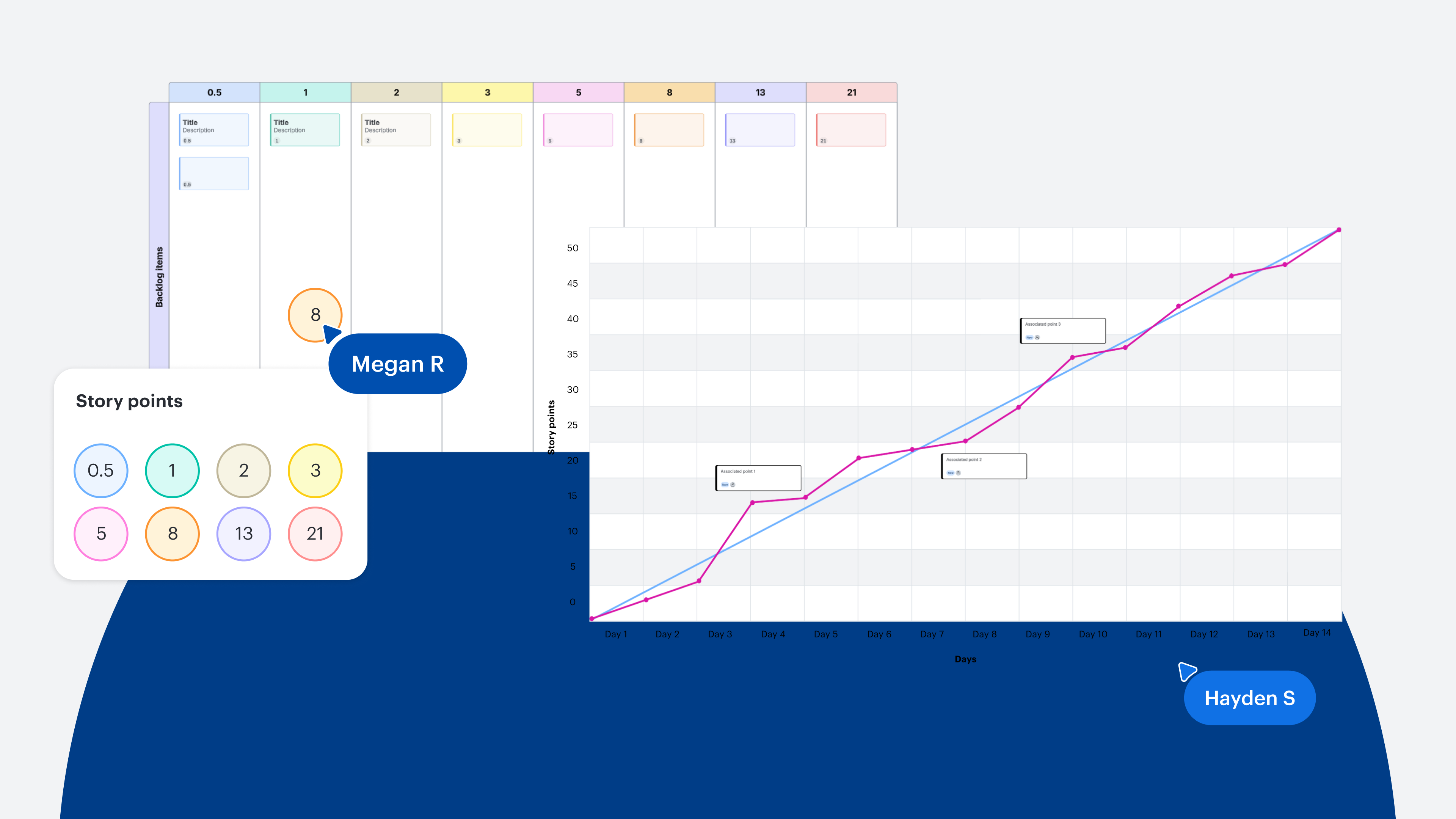
Use visual tools such as Kanban boards, velocity charts, and burndown charts to keep track of how much work you complete in each sprint.
Implementing Agile principles and techniques helps your team improve processes, increase productivity, and add product value while releasing features that your customers need as quickly as possible.
To reach your goals, you need to know how much work your team can complete in a sprint. Knowing this type of information makes it easier to meet established deadlines and ensure that your team is working at a sustainable pace.
Let's review how you can calculate sprint velocity and how to use a sprint velocity formula to accurately estimate the amount of work that your team can complete in each sprint.
What is sprint velocity?
In Agile, sprint velocity is the estimate of how much work your team can complete in future sprints based on the amount of work completed in previous sprints. With this knowledge, you can plan and prioritize tasks, understand what you’ll need, and more accurately predict your team’s ability to meet deadlines.
Your sprint velocity calculation also gives senior management and other stakeholders a better idea of when to expect product delivery.
How do you calculate velocity in Agile?
In order to calculate sprint velocity and estimate what work can be completed in the future, you need to measure the work that has previously been done. To get an average measurement of work that has been done, plan to review your previous three sprints.
If your team is new to Agile development and you don’t have previous sprints to look at, you’ll need to complete a few sprints. Then, you can gather useful data to help calculate an average.
In the following example, we will use story points to measure the amount of work completed in each sprint. A story point is a measurement used by Agile development teams to estimate how much effort it will take to deliver a user story.
Step 1: Count how many user story points have been completed during each sprint
At the end of a sprint, add up how many story points the team completed.
For example, assume that during sprint 1:
-
The team committed to completing five user stories.
-
Each user story had eight story points for a total of 40 story points. (While it’s unlikely that each user story will have the same estimation of effort, we will use the same number of story points per user story to simplify our example).
-
The team completed three of the five user stories.
In sprint 2:
-
The team committed to seven user stories (including the two that were not completed in sprint 1).
-
Each user story had eight story points for a total of 56 story points.
-
The team completed four of the seven user stories.
In sprint 3:
-
The team committed to nine user stories.
-
Each user story had eight story points for a total of 72 story points.
-
The team completed five of the nine user stories.
Step 2: Calculate the average of completed story points
The sprint velocity formula is easy: Simply add up the total of story points completed from each sprint, then divide by the number of sprints.
Sprint 1: 3 user stories x 8 story points = 24
Sprint 2: 4 user stories x 8 story points = 32
Sprint 3: 5 user stories x 8 story points = 40
Total = 96
So, your average sprint velocity is 96 divided by three, which is 32.
You can now base the amount of work to be done in future sprints on the average of 32 story points. If you have 160 story points of planned tasks remaining to complete, for example, you can assume that your team will need another five sprints to finish those tasks.
Remember: Sprint velocity is just an estimate. Your team will experience variables from sprint to sprint, such as team size, task complexity, and scope. Sprint velocity calculation is a great starting point to help you determine how much work your team can do before you factor in other variables.
Track progress with visuals
There are several Agile workflow management tools that you can use to track your team’s progress, such as velocity charts, burndown charts, and Kanban boards. These visual tools should be cloud-based so they can be widely accessed and viewed, and you can keep a record of your progress to inform your sprint velocity calculation.
Velocity chart
A velocity chart is a graph that shows estimated story points against story points that were actually completed. Story points are measured on the vertical axis, and completed sprints are displayed on the horizontal axis.
This chart is a simple visual representation of your iteration’s progress. Its purpose is to help estimate team performance. The chart lets you visualize the overall status of tasks and how much work your Agile team can complete in future sprints.
Velocity burndown chart
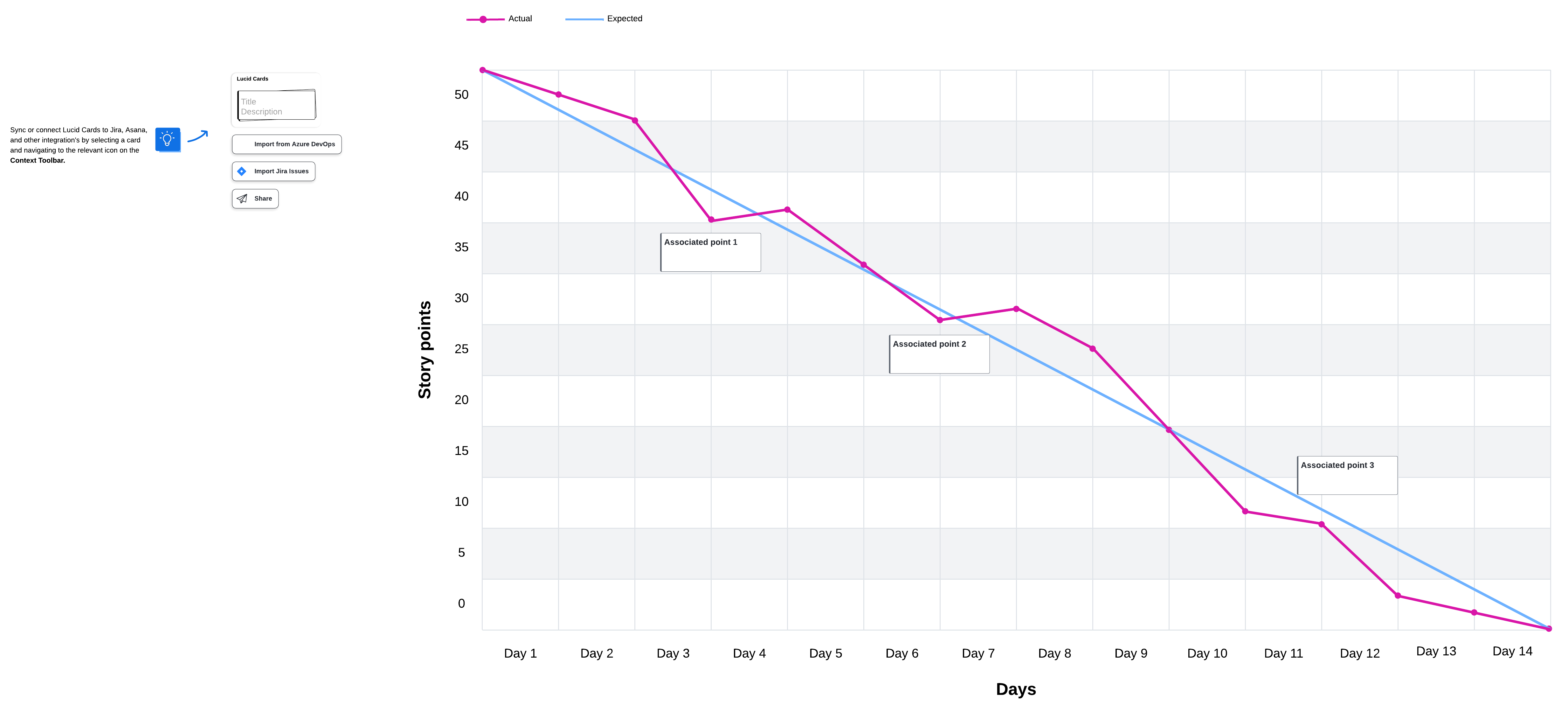
A burndown chart is a graph that shows the work that is planned to be completed in a sprint. Burndown charts allow teams to see how much work has been done, how much work is left to do, and how much time remains to complete the work. The burn rate estimates the amount of work that is done and the required rate of work based on the set time frame.
As tasks are completed, the graph “burns down” to zero on or before the last day of the time period.
Kanban board
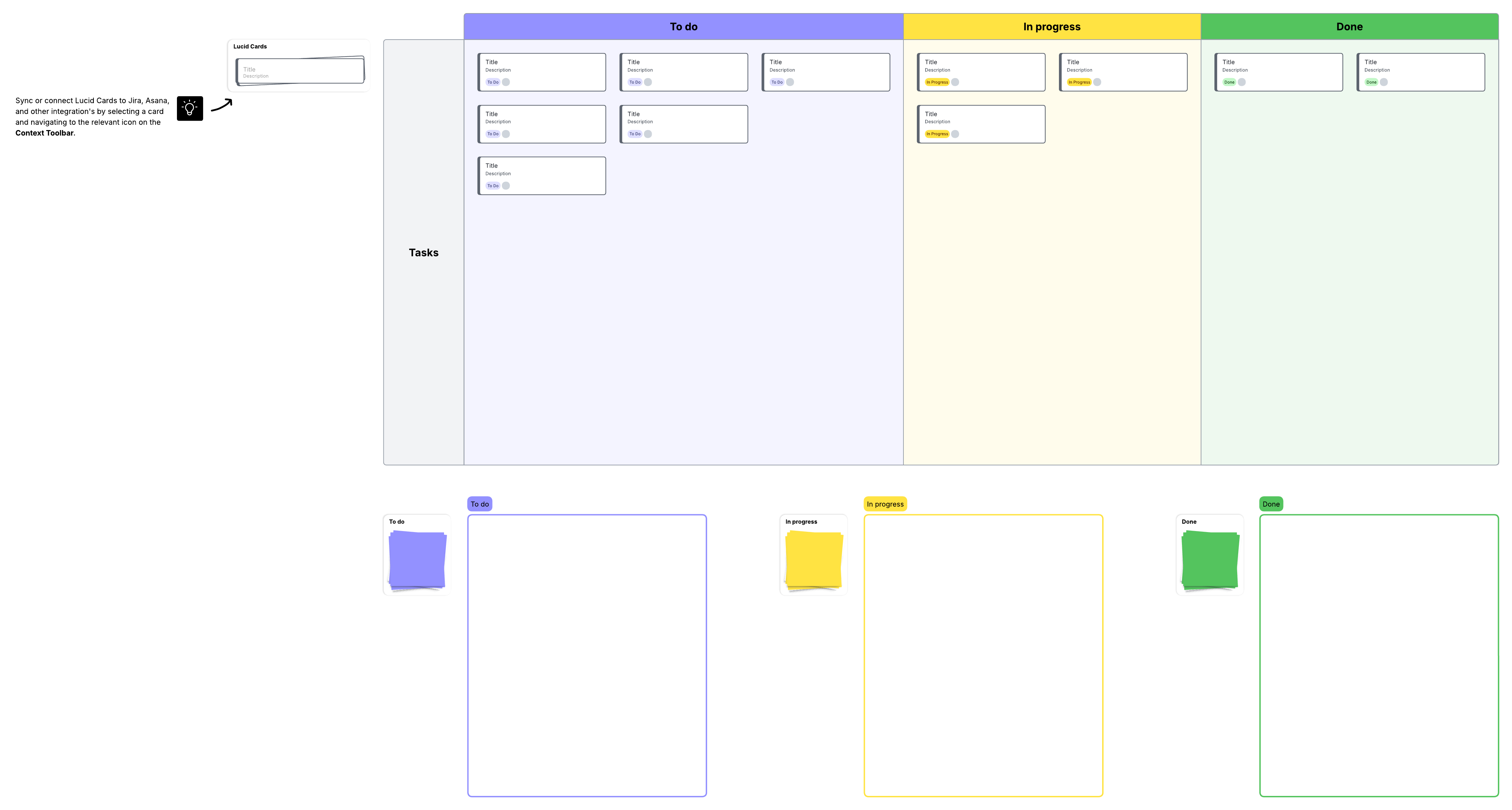
A Kanban board lists tasks in columns in the form of sticky notes or cards to help you visualize and track work. The simplest Kanban board configuration displays three columns representing various states of work progress, such as “To Do,” “In Progress,” and “Done.”
Many Agile teams use Kanban boards to keep track of necessary tasks, limit the amount of work in progress, and boost efficiency.
How to stabilize and improve velocity in Agile
Remember that velocity is an estimation, and it should not be considered the single source of truth for what the team will deliver. The number of completed story points at the end of a sprint will often vary from the estimated number. You may need to add what the Scaled Agile Framework (SAFe) calls “stabilization sprints.”
A stabilization sprint is added to the end of your normal development cycle before the product is shipped. Stabilization sprints are used to take care of technical debt, clean up code, fix bugs, perform testing against the code fixes, and so on. You typically don’t track velocity in stabilization sprints because you are not adding any new user stories or story points.
As you work more with velocity in Agile, you will get better at estimating the work that can actually be completed.
When working to stabilize and improve velocity, consider the following:
-
Write user stories that are clear, simple to read, and easy to understand.
-
Keep team membership and size as consistent as possible.
-
Use your sprint retrospectives to explore ways to stabilize velocity. For example, find ways to improve communication and coordinate the work to complete tasks on time.
-
Mitigate or eliminate dependencies that can delay work that the team has committed to complete.
-
Develop a better definition of done. Look at the tasks that are completed during a stabilization sprint and ask how you could have completed the task during the normal sprint.
-
Focus on quality instead of speed. Don’t rush through work to meet an estimate. The sprint velocity should not be the team’s goal. Taking time to develop quality products that are thoroughly tested will give you a better velocity estimate going forward.
-
Make sure there is enough time for proper testing to ensure that you are delivering quality products. Also, make sure you are not spending time on unnecessary tests. For example, if code hasn’t changed and has been stable for several sprints, don’t waste time testing it again.
-
Get help when needed. If your team is short on the skills needed to complete certain tasks, recruit inside or outside help. Ensure that team members stay up to speed by offering training to improve skill sets.
Remember, sprint velocity is not static, but reviewing past sprints to see what was accomplished can go a long way toward accurately predicting what your team can deliver in future sprints.

Explore more Agile estimation techniques
Read our guide to learn how you can use estimation to boost alignment and efficiency.
Read now