
Imagine: The management team at your organization wants to see an improvement in quality, an increase in quantity, and a decrease in time to market. So you spend a lot of time and work with a lot of resources to research, plan, design, build, and implement a process plan that you are confident will help your production teams be more efficient, make fewer mistakes, increase output, and get the product to market faster. The management team is excited about this new process and is eager to see it in action.
With great confidence, you present this new process to your employees. Instead of cheers and pats on the back, you get pushback from those who have to work with this new process. You explain in great detail how this process will improve production and increase revenue. But your shiny new plan is met with resistance.
Why?
In this article, we will explore some reasons for employee resistance to change, plus share some ideas for helping team members embrace new procedures.
Why are processes and procedures important?
Successful businesses center their operations on goals. To reach these goals, they put processes and procedures in place to ensure that quality products are available on time and meet customer expectations. Well-designed process plans can help your business:
-
Develop quality products and services
-
Produce products consistently and efficiently
-
Reduce time to market
-
Fulfill customer needs and improve satisfaction
-
Remain in compliance with industry standards
If you don’t have processes in place, or if your employees simply won’t follow outlined procedures, the effect could be devastating. You’ll miss opportunities to meet customer expectations and lose potential business.
What are some reasons for employee resistance to change?
Employees may be reluctant to adopt a new work process for many reasons. This can be disappointing and frustrating for managers, especially if they've put a lot of time and money into improving procedures. Here are some of the reasons you may get pushback on a new process proposal:
-
Creatures of habit: Humans are creatures of habit and generally don’t like change. If your employees have been doing their jobs a certain way for a long time, they’ve developed many layers of work-related habits that are hard to break.
-
Doubts about the necessity of a new process: If your employees already believe that they are doing a good job, they may wonder why you want them to change and worry that a new work procedure will slow them down.
-
Fear of added responsibilities: Employees may feel like they don’t have the training or skills necessary to take on new responsibilities, which can lead to fear of failure.
-
Confusion or misunderstanding of the process: Your employees may not understand how certain roles fit within the process. Complex processes may need to be rolled out in small, incremental changes to reduce errors and increase success.
-
Lack of understanding about the impact on customers: Employees who don’t have contact with customers may not understand how the proposed process changes will impact the final product and customer satisfaction. People may not follow processes because they don’t think that their work has any kind of impact on customers.
-
Inefficient processes: This may be hard to accept, but employees could be working around your processes because those processes simply don’t work. Maybe you missed crucial steps in the planning stages, or you don’t have the right people assigned to the right tasks, so they don’t have confidence in your processes in general.
-
No support from management: You may have created your business process at the request of company leadership. Sometimes, however, these same leaders are not fully supportive of process implementation and are not willing to wait for results.
-
Conflicts with other demands: Sometimes employees may need to deviate from a process to meet a special request. For example, some resources might be pulled from your process to meet the demands made by another process.
How to motivate your employees to follow procedures
There are several simple ways you can make the implementation of new processes more palatable. You already know that people resist change, but your team members are also reasonable and willing to try new things when they make sense. Here are some of the best ways to motivate employees to embrace new procedures.
Diagram your process and document everything
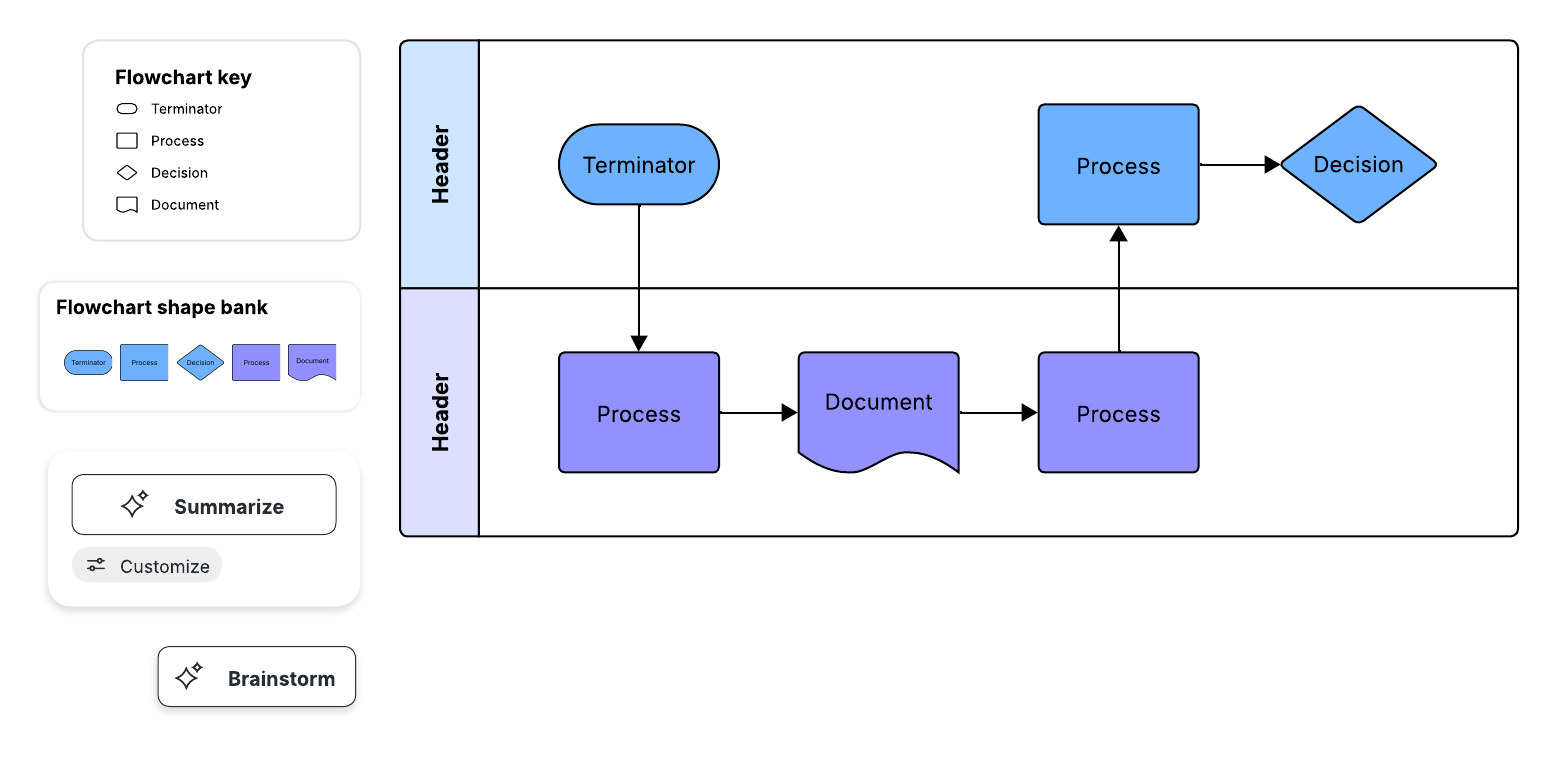
Most of us are visual learners. A page with pictures and diagrams is much easier to read and digest than a page with nothing but technical documentation. Use visual aids like flowcharts to define process flows and identify specific tasks.
The combination of visuals and text can be a valuable reference for all team members as they learn how they fit in with the process. Lucid makes it easy to create these powerful visuals through AI. Document complex processes and systems in seconds to craft documentation tailored specifically to your team. Simply describe the diagram or flowchart you’d like, and once it’s automatically created, you can polish it by making quick changes and one-click shape additions.
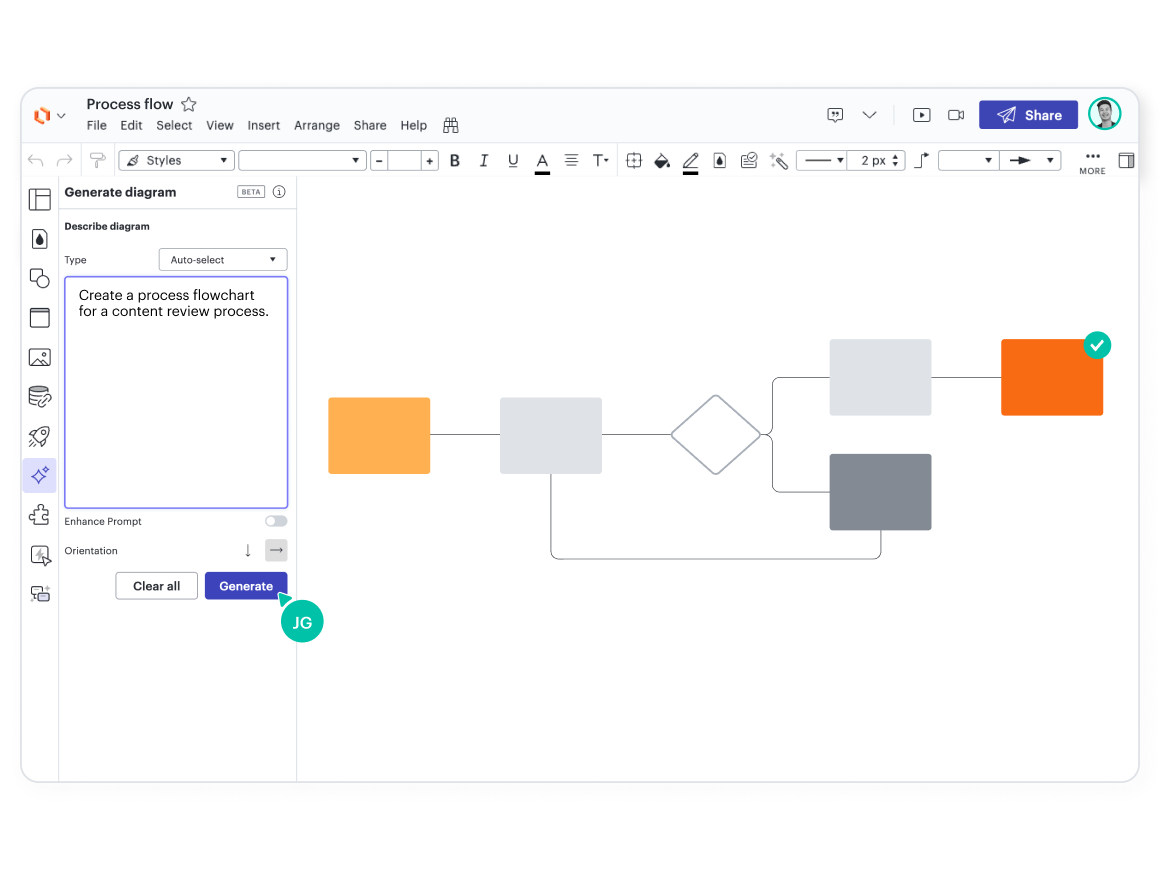

Learn more about AI diagramming with Lucid.
Learn moreOr, try one of our templates to kickstart your diagramming.
Make your process easy to find
After you have created your documentation, put it where team members can easily find it. Create a single source of truth that can be accessed by anybody who needs it, day or night, from any location.
For example, Steve Groff at Delta Airlines printed off process documentation and put it up in the warehouse where everyone could see and adhere to it. “We’ll print out huge murals on the wall that show the process. It keeps things visual. It keeps people on task. It keeps people doing their job and doing it correctly.”
However, physical documentation often isn’t feasible or practical, especially when you work with dispersed teams. A good cloud-based service lets you securely store your documents and diagrams where they can be easily accessed as needed. Team hubs and spaces in Lucid are a great place to start. They serve as dedicated, virtual spaces that house all the context and documentation team members need to do their best work confidently. From the cloud, your teams can collaborate in real time to refine and update the processes and documents as necessary. Best of all, everyone can stay up to date with any modifications that are made to the process.

We’ll walk you through setting up a team space or team hub to maximize collaboration.
Read nowHelp employees understand the big picture
Show your employees how the process impacts the company’s goals and customer expectations. Help each employee understand how their role fits within the process and how it impacts the customer if the task is not performed correctly. If your employees understand the importance of their roles, they’ll be more willing to work with a new process.
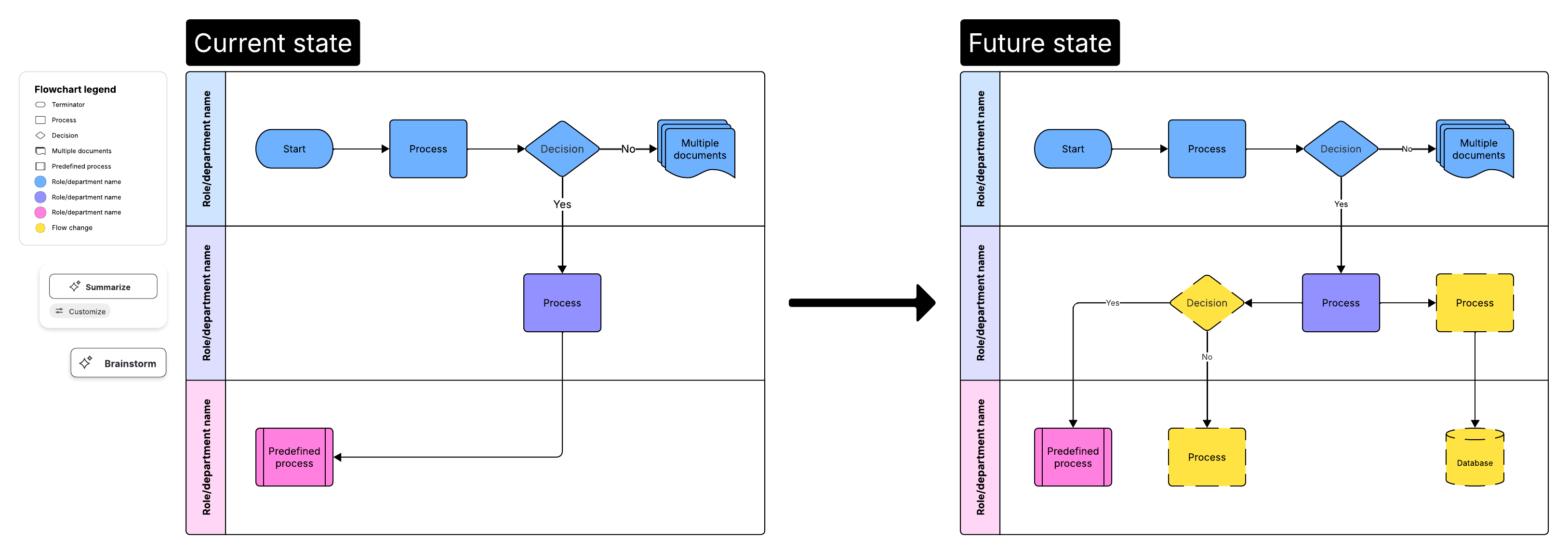
For example, you may want to show the current state of your process back-to-back with the future state so it becomes clear where the new process will reduce bottlenecks, improve handoffs, and more. In Lucidchart, you can use layers to toggle between current and future states.
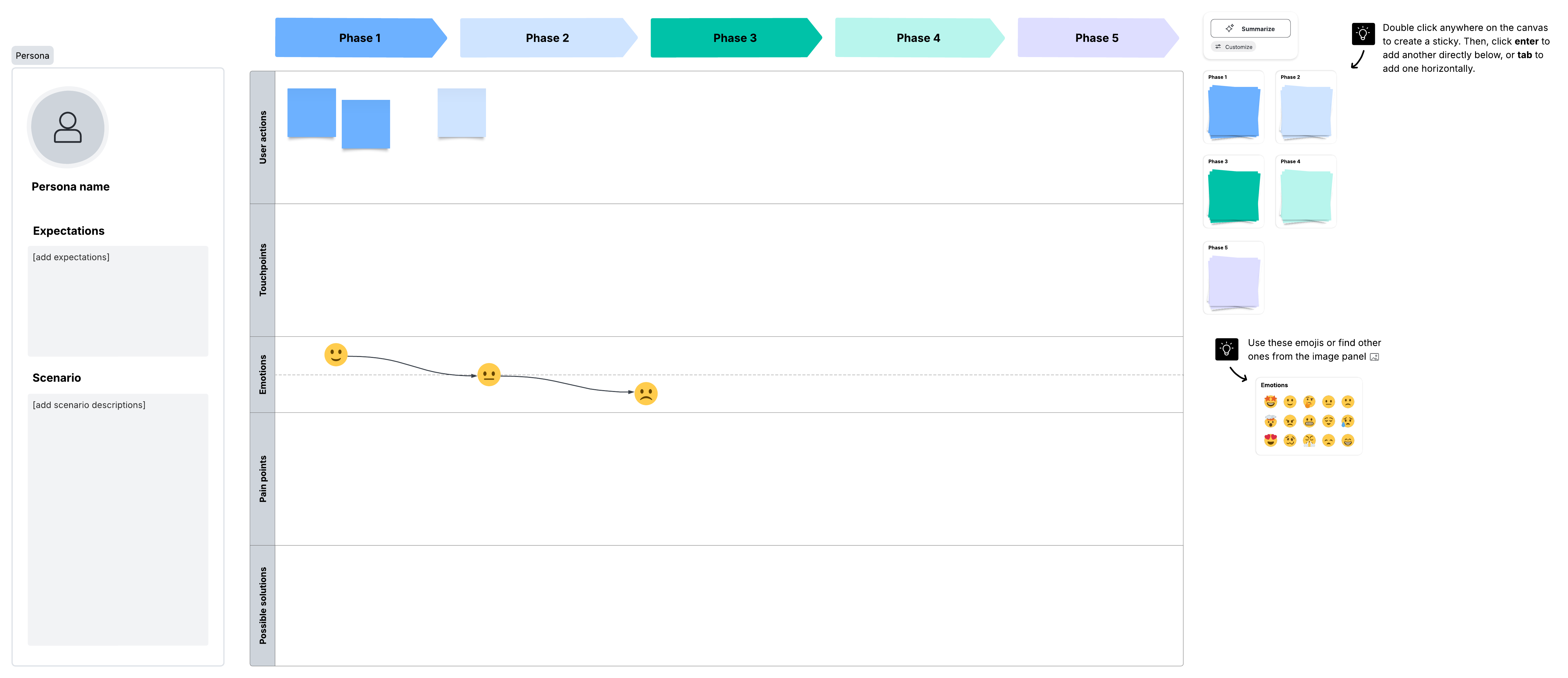
You can also use a customer journey map to help your employees understand the big picture. A customer journey map represents a customer’s experience with your products and services. Use the customer journey map to show your employees how their roles fit into the overall customer experience.
Reward employees for compliance
One of the biggest reasons for employee resistance to change is that they don’t see any value in it for them personally. Recognize employees for their good work. People like to know that they are doing a good job—and rewards don’t have to be big or expensive to have an impact.
Show employees what to do
When you first introduce a process or hire a new team member, train employees on how to perform each task within the process. Modeling a process can be much more effective than simply telling team members what to do. After reviewing the new process with them, give them time to work hands-on with the process, and provide them with feedback. Team members will learn faster and retain more knowledge by doing rather than just listening.
Decide on a process improvement methodology
The only constant is change, and your processes should change along with your business. Select a process management methodology so that you have a consistent way of analyzing, planning, optimizing, and automating your processes. The goal should be to improve performance, reduce costs, meet customer needs, and improve customer experience.
Let your employees know that you plan to continuously improve the process, and to further gain their buy-in, invite them to participate in monitoring the effectiveness of the process and suggesting changes.
The bottom line is that one of the best ways to motivate employees is to involve them. When the employees who actually work with the process are asked for feedback, they are more invested in the process and more willing to put in the effort to make it work.

Explore our step-by-step guide to business process improvement.
Get the guide