Research has shown that unity is vital in the workplace. It not only has been proven to boost productivity but to also improve job satisfaction, increase job longevity, and enhance creativity. The problem? The larger or more dispersed your organization is, the more difficult it can be to align as a group. When you’re working across departments, state lines, or even time zones, how can you come together to truly feel like a team? This is why all-hands meetings are so important.
In this article, we’ll explain what exactly an all-hands meeting is and why you should prioritize them in your org if you don’t already. Plus, we’ll include our best tips to make your all-hands meetings a success and throw in a couple of free templates to get you started!
What is an all-hands meeting?
All-hands meetings (sometimes referred to as town hall meetings) bring together employees from all levels and departments. There are an endless number of things that can be accomplished during these meetings, but they’re traditionally used to share news and company updates, celebrate wins, answer questions or address concerns, and promote unity throughout the organization.
While we recommend having a regularly scheduled all-hands meeting (for example, quarterly or twice monthly), any of them you hold are valuable. Even one-off all-hands meetings for big announcements or large celebrations can make a positive impact on team members.
What is the purpose of an all-hands meeting?
There are so many reasons why an all-hands meeting can add value to your org. Here are just a few:
-
They keep everyone in the company aligned: All-hands meetings are an efficient way to share news so everyone is in the loop and engaged in important initiatives.
-
They provide an opportunity to ask questions: On a day-to-day basis, entry-level employees rarely have the chance to chat with executives. All-hands meetings present a chance to connect different levels of employees, boosting transparency and in, turn, trust.
-
They positively impact company culture: All-hands meetings are most effective when they’re a mix of business and pleasure. Consider including a clever activity or icebreaker, or even just some lighthearted fun—it makes a big difference in strengthening unity and morale.
How to plan an all-hands meeting
There are many ways to approach the organization of an all-hands meeting. There isn’t a one-size-fits-all agenda or template, because the exact format should look different for every company and work culture. However, here are a few things you should keep in mind regardless:
Meet consistently
To maximize the effectiveness (and the attendance) of your all-hands, they should be held at a regular cadence at the same time of day. This sets expectations for employees and helps them prepare.
Assign a moderator
Someone should be in charge of facilitating, keeping track of time, and ensuring an effective flow of the meeting. In some cases, this may be the CEO or president of the company, but others may fill this role as well.
Create an agenda
A planned agenda is an absolute must to stay focused and achieve your goals for the all-hands meeting. Below, we’ll explore what inclusions could be considered for an all-hands agenda.
Follow up afterward
Always record these meetings to reference later (and to pass along to anyone who may have missed it). Distribute the recording as soon as possible after the meeting, and share next steps and shout-outs in writing.
Simplify required tools
In this case, more isn’t always more. Having too many platforms you’re jumping between during an all-hands or using tools inconsistently can lead to confusion for attendees. Standardize and consolidate necessary tools needed to participate. Consider a template from a platform like Lucidspark to engage attendees visually and keep everyone on the same page.
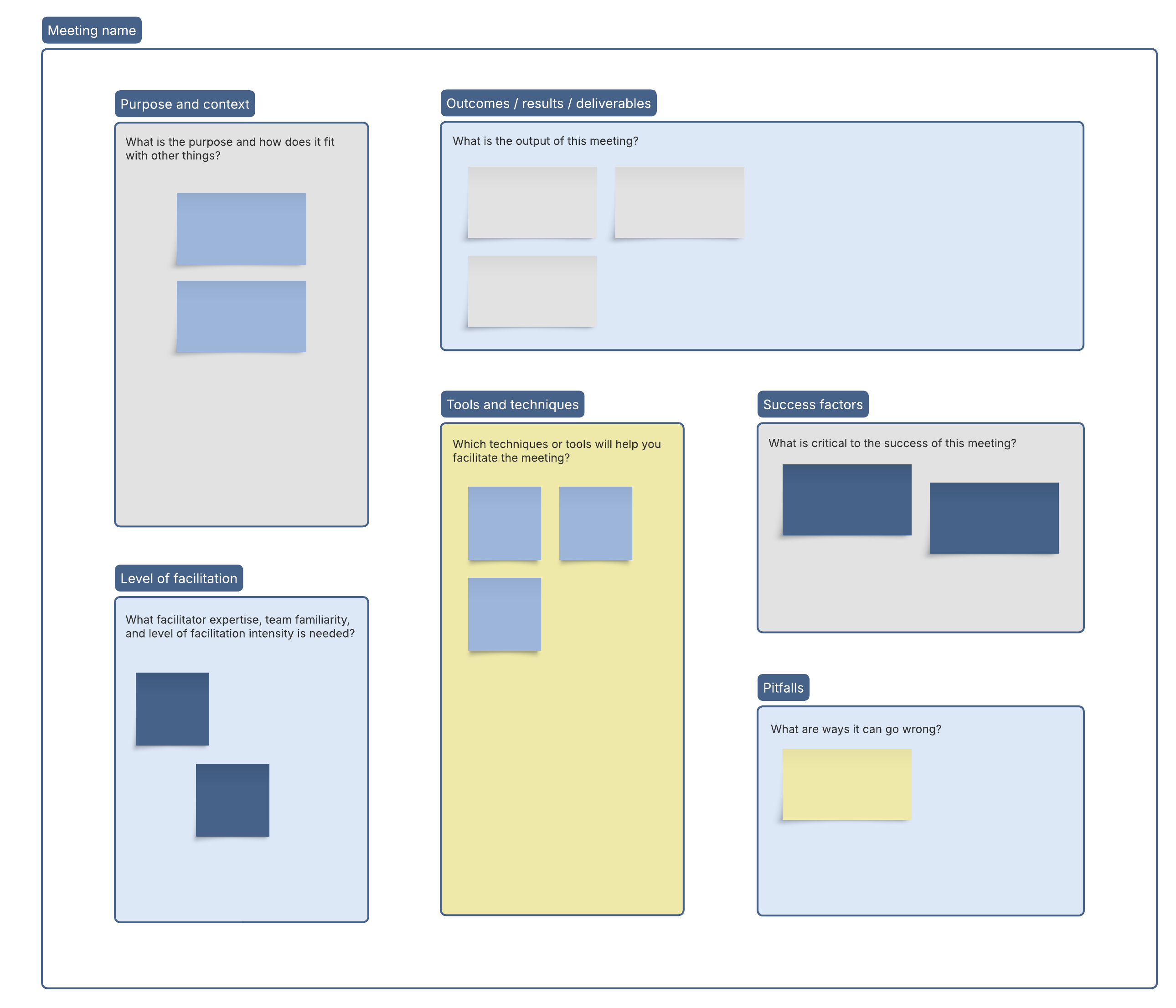
What should go on an all-hands meeting agenda?
Each meeting will probably look a little different, but consider including the following elements in your agenda:
-
Introduction/warm-up: Starting things off with an engaging icebreaker, fun video, exciting piece of news, or something else creative will grab everyone’s attention right away and help them feel engaged.
-
Announcements and updates: Shout out new employees, share changes to policies or positions, or announce upcoming important dates/events.
-
Achievements: Take the time to highlight good news and milestones on different levels—both org-wide and departmentally. You can even invite customers to join the meeting and share their own wins and experiences with your product.
-
Shout-outs: Give shout-outs to employees who embody the company’s values, hit goals, or lift others up. This encourages a culture of gratitude and builds unity between team members.
-
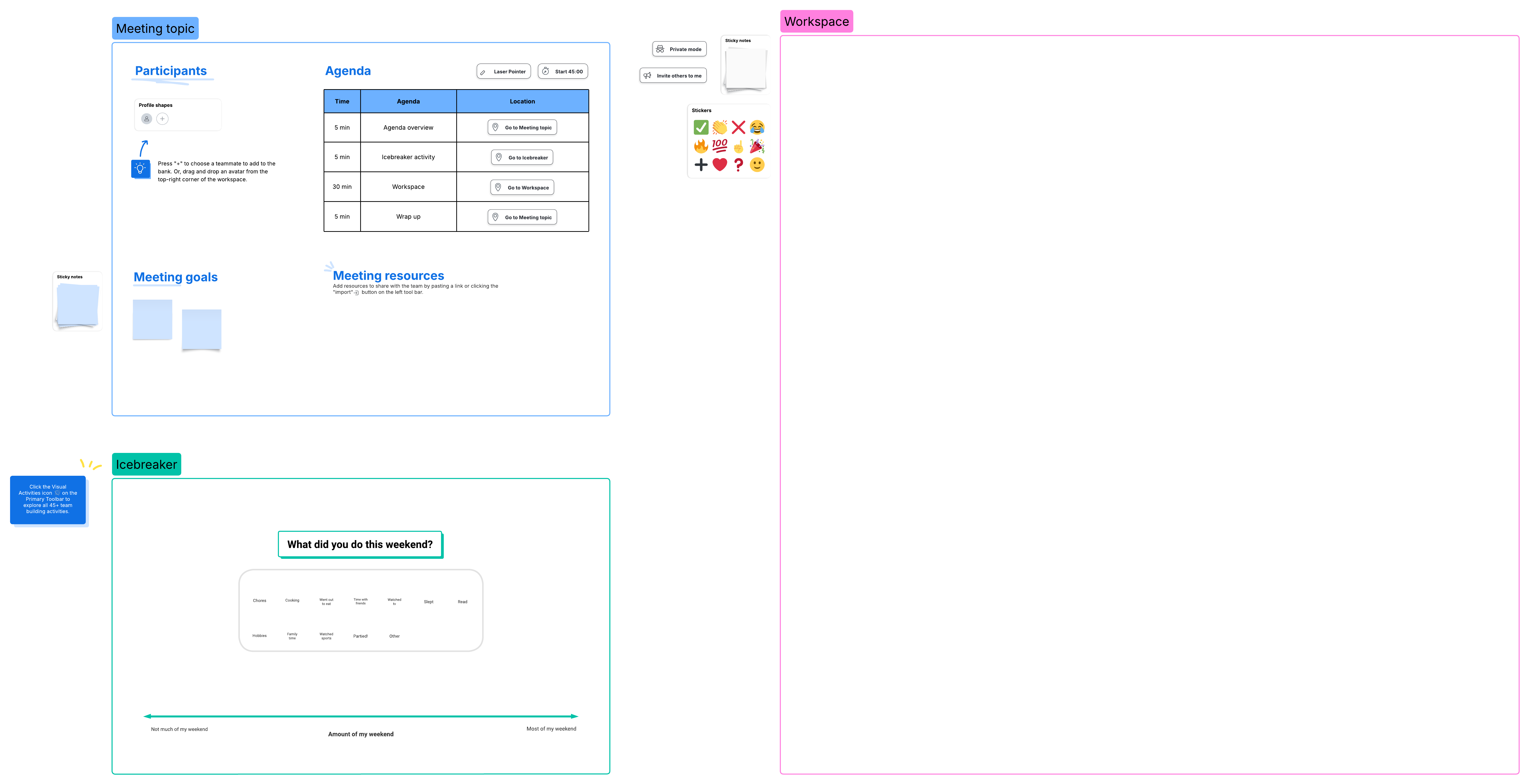
Initiatives: Provide updates on initiatives and strategies and introduce new ones—especially at the beginning of a fiscal year or quarter. Report on wrapped projects and share metrics on wins and losses. Templates like the one below can help you present data visually so it’s easier to understand.
Virtual all-hands meeting ideas
If your workplace is dispersed or hybrid, all-hands meetings can be even more crucial to your alignment because you are literally never together in person. While remote all-hands should be approached slightly differently, your goals for the meeting should still be the same. Keep these tips in mind as you’re planning one.
-
Plan ahead to advertise: When the meeting isn’t just down the hall, you must take extra care to let team members know about it. Add it to shared calendars well in advance and post on multiple channels: Slack, emails, newsletters, etc. This is also where having a regular cadence can be useful so everyone knows what to plan on.
-
Take care in scheduling: If you’re working across time zones, consider a time that would be convenient for most people, even if it’s an unconventional spot in the day. Or, you can switch back and forth between a couple of different times so everyone has a turn at a convenient time (and the same people aren’t consistently dealing with an inconvenient time).
-
Prep presenters: For a smooth meeting flow, ensure that all speakers are assisted in preparing their technical elements so they can screen share and avoid sound/visual problems.
-
Consider the meeting length: Remember, attention spans are usually shorter in a remote meeting compared to in-person meetings because team members will have extra distractions at home competing for their attention. Cut down on any unnecessary content—short and sweet is key here!
Regardless of how often you have an all-hands meeting or what the agenda for yours looks like, holding them can make a big difference in your org. From boosted alignment and productivity to improved culture and transparency, there are many reasons why all-hands meetings are indispensable in successful companies.

Explore all of our templates to help supercharge your meetings and workshops.
See templates